

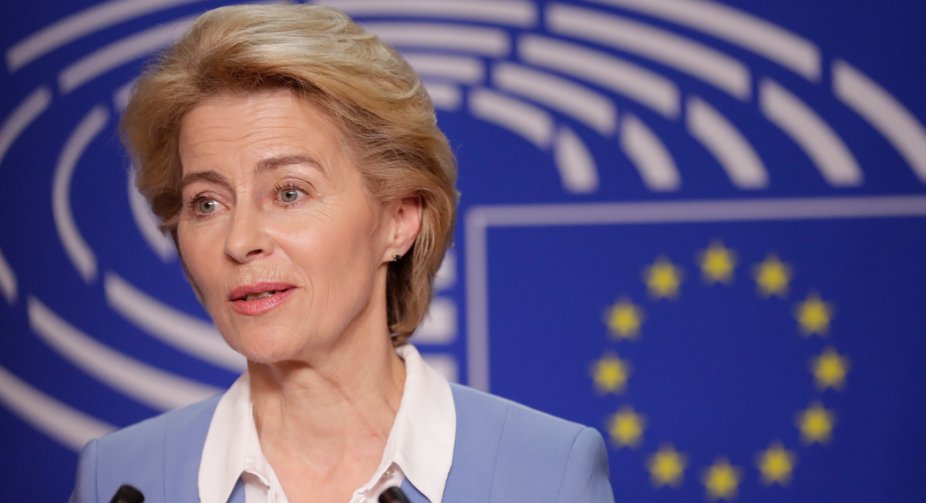

President of the European Commission Ursula von der Leyen said that large-scale sanctions in case of further Russian aggression against Ukraine are already prepared. She said this in an interview with Le Journal du Dimanche, reports UNN.
According to Ursula von der Leyen EU sanctions against Russia have been agreed with the United States. According to her, the EU, the SGA and NATO expect Russia to stop provocative actions.
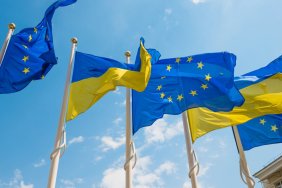
"Any further aggression against Ukraine will be subject to sanctions with huge consequences. They are already ready. European countries are united and act in concert with the U.S. and NATO. We want good relations with Russia, but it depends on her actions. It has to stop its provocations," the president of the European Commission said.
We note that Ukrainian authorities and Western partners have recently been drawing attention to Russia's aggravation of the security situation in Donbas, the build-up of Russian forces along the border with Ukraine, the danger of a new Russian invasion and the intensification of Russian disinformation.
Putin's main demand is for guarantees from the United States and its allies that NATO will not expand further east and deploy weapons systems that Russia considers a threat there.
Against this backdrop, Russian and U.S. presidents Vladimir Putin and Joe Biden held bilateral talks via video link on Dec. 7 that lasted two hours.
US National Security Adviser Jake Sullivan said at a briefing after the talks between Putin and Biden that Joe Biden did not make concessions to Vladimir Putin regarding guarantees not to allow Ukraine to join NATO.
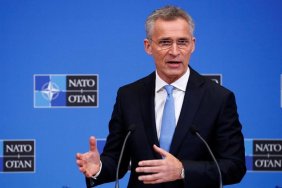
On December 15, NATO Secretary General Jens Stoltenberg reiterated to Russia: Ukraine and Georgia have the right to choose their own alliances, and "spheres of influence" are history.
On December 17, Russia sent the U.S. and NATO proposals on security in Eastern Europe, which it believes are necessary to ease tensions around Ukraine. Moscow's demands include a ban on Ukraine joining NATO, the Kremlin's veto on the deployment of NATO military forces in former Soviet republics and a halt to military exercises near its borders.
NATO Secretary General Jens Stoltenberg said that the Alliance has received Russia's latest "proposals" and that such a dialogue should take place in consultation with NATO's European partners, such as Ukraine.
White House National Security Adviser Jake Sullivan said in a telephone conversation with Russian presidential aide Yuri Ushakov that the U.S. is willing to negotiate with the Kremlin both directly and through the NATO-Russia Council and through the OSCE. But Moscow must allay Western concerns about its military buildup on the border with Ukraine.
The U.S. State Department indicated that the United States plans to begin talks with Russia on European security guarantees in January to reduce tensions around Ukraine caused by the deployment of Russian military personnel on its border.