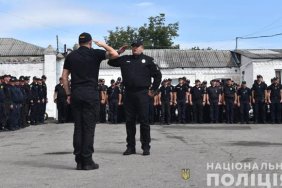


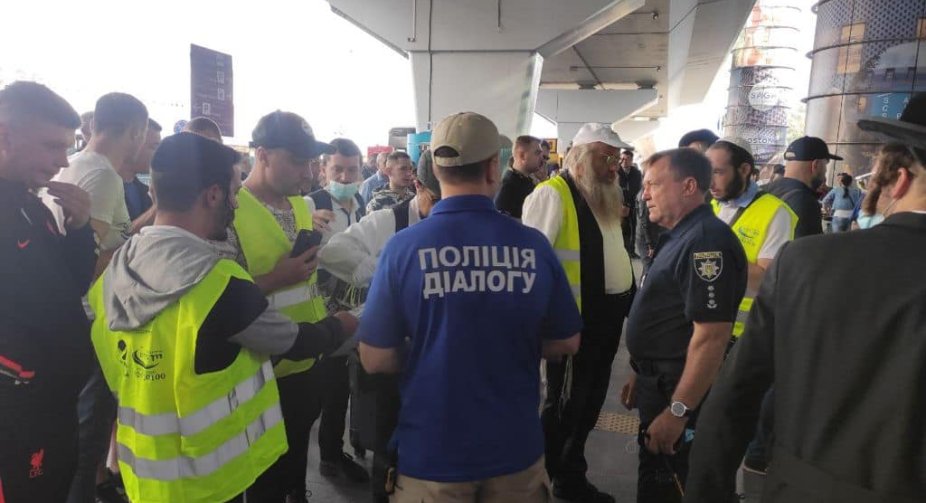

More than 120 policemen of Kyiv region guarantee the protection of public safety and order at Boryspil airport during the arrival of Hasidic pilgrims, the Ministry of Internal Affairs's Telegram channel reported on Wednesday.
"The police are carrying out a set of security measures to make Israelis and citizens of other foreign countries celebrate the Jewish New Year in safety. A number of services are involved in public safety and order: Boryspil police, patrol police, special police, explosives, dialogue police and more than 50 servicemen of the National Guard ", - it is told in the message.
The airport also has a Situation Center, which is responsible for coordinating the activities of law enforcement agencies.
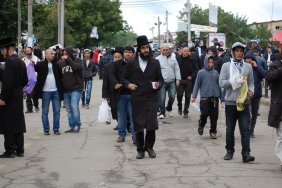
September 6-8. Several thousand Hasidic pilgrims have already arrived in Uman, Cherkasy region, to celebrate Rosh Hashanah's Jewish New Year in advance, as not everyone was able to attend the celebrations last year due to intensified anti-epidemic measures. In total, the State Border Guard Service of Ukraine expects the arrival of more than 20,000 believers.
it is known that in the autumn pilgrims go to Uman to celebrate Rosh Hashanah (New Year) on the grave of their spiritual leader Rabbi Nachman. He was born in the city of Medzhibozhi (now - Khmelnytsky region) in 1772 (5532 since the creation of the world according to the Jewish calendar). Then he led a nomadic lifestyle, visited various towns in Ukraine, mainly in Medvedivka and Zlatopol, and spent the last eight years of his life in Braslav (now - Belarus). In 1808, Nachman contracted tuberculosis, settled in Uman, where he died and was buried in 1810. Since then, the city has become a center of Hasidic worship, where they gather from around the world every Jewish New Year.