


On the agenda of the authorities in Ukraine, the main task is to establish a stable and predictable export for all types of cargo, which will not depend on the whims and blackmail of Russia, writes the profile website "Center of Transport Strategies" in an article dated July 10.
The author of the material, Olha Bystrytska, notes that Ukraine should use all options for this, in particular the possibilities of deep-sea ports of the Black Sea: if earlier the safety of the passage of ships was guaranteed by the "grain agreement", then in the event of its termination, a new mechanism is needed.
"Danube ports are able to take on only a part of the cargo flow, and neither agro-traders nor shippers of industrial cargo can do without "deep water" in sea exports, whose capabilities are artificially limited by the capacity and shallow depths of the ports of the Danube region," the journalist writes.
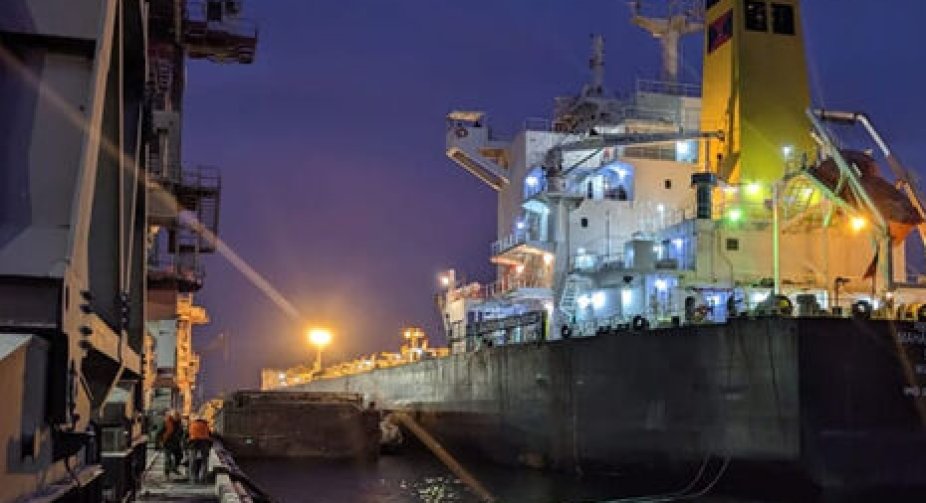
She reminded that there was already a precedent for the operation of the "grain corridor" in the format "without Russia": ships continued to go through the Bosphorus both to the entrance and to the exit from Ukrainian ports, and the commission worked better and faster without representatives of Russia. There is every possibility to repeat this scheme, the author believes.
"Of course, there are risks of provocations and shelling from Russia, and companies can refuse to insure ships. But Ukraine has resolved the issue of insurance, and even in Brussels they said that they can support and guarantee insurance in case of damage to the ship or goods. At the same time, there is a plan "B", which envisages the operation of the corridor without Russia. This plan "B" will make it possible to fully restore the operation of the ports - to work not only for exports, but also to accept imports and expand the range of cargo," writes TTS.
According to the publication, the authorities of Ukraine are currently considering two main possible options: the first is the restoration of civil shipping for all types of cargo without the consent of Russia, but in partnership with Turkey; the second is the independent restoration of shipping, and here the goal is not to pass one or two ships, but to make the operation of the corridor permanent and stable, therefore the safety component is important. They are currently being trained, Bystrytska claims.
"There is indeed such a possibility, but it must be carefully worked out: these are not only commercial and logistical issues, but also security issues, because the country is in a state of war. When and how will it be possible to work under an alternative scenario - we will say when all structures, who are involved in this process, will be ready," she quotes the Deputy Minister of Development of Communities, Territories and Infrastructure of Ukraine Yuriy Vaskov.
We will remind that Russia blocked the export of Ukrainian products from sea ports after the start of a full-scale invasion of Ukraine on February 24, 2022.
On July 22, agreements on sea export of Ukrainian grain from three ports were signed in Turkey. Ukraine signed a document with Turkey and the UN, Russia mirrored the same. The first vessel loaded with Ukrainian grain left the port of Odessa on the morning of August 1. Chornomorsk and Pivdenny ports also participate in the "grain corridor". Thanks to the Black Sea Grain Initiative, food prices decreased, which indirectly saved more than 100 million people from hunger, the UN said in October.
The "Grain Agreement" has been extended several times, but Russia has repeatedly blocked the operation of the "Grain Corridor", refusing to register courts and carry out their inspection.
Russia threatened that the "grain agreement" would cease to exist if by May 18, 2023, the Russian Federation did not provide guarantees for the fulfillment of its requirements, in particular with regard to ammonia, and was against the "expansion or indefinite extension" of the agreement. The Russian Federation also demands to connect "Rosselkhozbank" to SWIFT, restore the supply of agricultural machinery, spare parts and service, cancel restrictions on insurance and lift the ban on access to ports, referring to the Russia-UN memorandum.
As a result, in May, the contract was extended until July 18, and negotiations regarding its extension are ongoing. All parties, except Russia, are in favor of continuing the operation.
According to the UN, almost 32.8 million tons of grain were exported during the operation of the "grain corridor".