


On the weekend of January 22 and 23, the Russians tried to conduct an offensive operation in the Zaporizhzhya direction, but failed. In addition, the Armed Forces conducted successful counteroffensive actions in the Bakhmut area.
This was reported by the Institute for the Study of War (ISW).
Ukrainian counteroffensive in eastern Kharkiv and western Luhansk regions
Russian troops continued limited ground attacks with the aim of regaining lost positions northwest of Svatovo. The General Staff of Ukraine reported that Ukrainian troops repelled Russian attacks on Stelmakhivka (15 km west of Svatovoy) and Novoselyvske (15 km northwest of Svatovoy) on January 22 and 23. On January 22, geolocation footage of the fighting, published on January 22, shows how Russian troops are storming Ukrainian positions near Novoselivskyi in the style of a "living wave". Russian military bloggers claimed that heavy fighting is ongoing in Novoselivskyi, where Ukrainian forces are trying to advance east towards Kuzemivka (15 km northwest of Svatovo).
Russian troops continued limited ground attacks to recover lost positions around Kreminnaya on January 22 and 23. The General Staff of Ukraine reported that Ukrainian troops repelled Russian attacks in the direction of Ternu (15 km west of Kreminnaya) and in the direction of the Serebryanka forest massif (10 km southwest of Kreminnaya). The former ambassador of the so-called "LPR" in Russia, Rodion Miroshnyk, said that Russian troops near Kreminnaya are holding positions within 50-200 meters of Ukrainian forces.
Geolocation images published on January 21 show that Russian troops are holding positions southwest of Ploshanka (15 km northwest of Kreminnaya) near Zhuravka creek. Russian "militants" claimed that Russian forces were active along the Ploschanka-Makiivka line northwest of Kreminnaya throughout the day on January 22, and claimed that Russian Airborne Forces units captured three Ukrainian strongholds in unspecified areas near Kreminnaya. Geolocation footage of the fighting from January 20 shows Ukrainian troops regaining positions near Bilogorivka, approximately 10 km south of Kreminnaya.
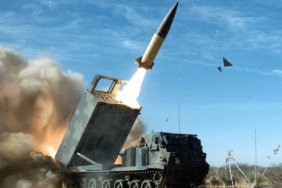
On January 22 and 23, Ukrainian troops carried out strikes with HIMARS on areas of concentration of Russians in the Luhansk region. The People's Militia of the so-called "LPR" announced that Ukrainian troops attacked Kadiivka (50 km west of the city of Luhansk at the intersection of the T0504 and T1317 highways) on January 22. Serhii Bratchuk, the spokesman of the People's Council under the Odesa Regional Military Administration of Ukraine, noted that one blow was inflicted on a machine repair plant, which the Chechen forces used as a hospital. Sources in the so-called "LPR" additionally claimed that on January 23, Ukrainian troops struck with HIMARS at an electrical substation between Zoloty and Pervomaiskyi (approximately 50 km northwest of the city of Luhansk).
Battles in Donbas
On January 22 and 23, Russian troops continued ground attacks around Bakhmut. The General Staff of Ukraine reported that Ukrainian troops repelled Russian attacks on Bakhmut itself; to the northeast of Bakhmut near Verkhnokamyanskyi (30 km to the northeast), Bilogorivka (20 km to the northeast), Krasnaya Hora (5 km to the north), Vyimka (23 km to the northeast), Rozdolivka (15 km to the northeast east), Paraskoviivka (8 km to the northeast) and west of Bakhmut near Stupochka (10 km west of Bakhmut). Russian military bloggers claimed that the forces of Group "Wagner" were operating southwest of Bakhmut in the Klishchiivka area to advance to Ivanovsk and cut the Ukrainian line of communication T0504 Kostiantynivka-Chasiv Yar-Bakhmut (GLOC). The State Border Service of Ukraine reiterated that Ukrainian forces control most of Bakhmut itself and are conducting successful counterattacks in order to restore lost positions in the area. The Russian "military" claimed that the forces of the "Wagner" group are advancing in urban areas on the eastern and southern outskirts of Bakhmut. Geolocation footage of the fighting published on January 22 confirms that Russian troops occupied the northern part of Opytny on the southern outskirts of Bakhmut.
Russian troops continued ground attacks on the western outskirts of Donetsk on January 22 and 23. The Ukrainian General Staff reported on Russian offensives on Novobakhmutivka (20 km north of Donetsk), Pervomaiske and Vodiane (both northwestern outskirts of Donetsk), as well as Maryinka (on the southwestern outskirts of Donetsk). Geolocation footage of the fighting, published on January 20, shows that Russian troops have advanced slightly to the east of Vodyanyi. A Russian military blogger published footage showing Russian soldiers of the 150th Motorized Rifle Division of the 8th Combined Arms Army of the Southern Military District carrying out assault operations in the Mariinsky direction on January 23. Russian "militants" continued to claim that Russian troops were fighting for control over the western part of Maryinka.
Russian forces did not conduct any reported or confirmed ground strikes in western Donetsk and eastern Zaporizhzhya regions on January 22 and 23. The Ukrainian General Staff reported that Russian troops are conducting defensive operations in the area. During January 22 and 23, Russian troops continued regular fire along the contact line southwest of Donetsk and in the east of the Zaporizhzhya region.
"Southern Axis"
Russian troops have probably conducted an unsuccessful offensive operation in the Zaporizhzhya region in the last 72 hours. Russian forces have not made any confirmed territorial gains, despite repeated claims by one Russian occupation official. On January 23, the General Staff of Ukraine confirmed that Russian troops conducted offensive operations in the Zaporizhzhya region on January 20 and 21 near Maly Shcherbaki, but did not specify whether Russian troops had made territorial gains. It is unclear whether this operation is ongoing at the time of publication.
On January 22, the Russian Ministry of Defense (MoD) said that during offensive operations in the Zaporizhzhya region, unknown units of the SVO captured more advantageous positions, but did not provide any details. Zaporizhzhya regional occupation deputy Volodymyr Rogov, who on January 20 initiated baseless claims about Russian troops capturing several settlements in Zaporizhzhya region, said that Russian troops captured Kamianske (approximately 30 km south of the city of Zaporizhzhya on the banks of the Dnipro River). Previously, Rogov claimed that on January 20, Russian troops captured Mali Shcherbaki, Shcherbaki, Novoandriivka, Novodanilivka, Mala Tokmachka and Biloghirya.
Russian sources contradicted Rogov's claims, indicating that Russian forces likely had not made any territorial gains on the Zaporizhzhya front line as of January 23. As of this publication, there are no publicly available sources that support Rogov's claims. Available geolocation visual evidence from 21 to 22 January shows squad-sized Russian elements fighting in fields approximately 2-3 km south of Novodanilivka and Mali Shcherbaki.
A well-known Russian "military officer" reported that as of January 23, Ukrainian forces regrouped and held the Mali Shcherbaki-Scherbaki-Novoandriivka-Novodanilivka line. Other Russian military bloggers reported that Russian forces began shelling targets along the Zaporizhzhya front line - including population centers that Rogov claimed were captured by Russian forces - on January 23 after an attempted Russian offensive on January 22, suggesting that the Russian offensive was unsuccessful. The Ukrainian Zaporizhzhya Military Administration reported that Russian forces had shelled several villages that Rogov claimed had been captured by Russian forces. The Ukrainian General Staff reported that Russian troops were on the defensive in the Zaporizhzhya region. A senior Ukrainian military spokesman said Russian forces in southern Ukraine are not conducting large-scale offensive operations and have not made any sustained tactical gains on January 22.
Perhaps Rogov is pushing the narrative of Russia's tactical successes in the Zaporizhzhya region to create a positive narrative to distract the Russians from the lack of promised progress in Bakhmut. Rogov's statements found a good resonance in the Russian-language information space and were widely distributed in the main Russian state publications, such as TASS, and among the Russian "warlords" in Telegram. Many Russian military bloggers exaggerated the importance of Soledar and claimed that the tactical offensive of Russian troops in Soledar foreshadows the encirclement of Bakhmut by Russian troops.
Russian forces have not made significant progress near Bakhmut, despite an advance on Soledar in mid-January, and an imminent Russian encirclement or capture of Bakhmut remains unlikely. The discrepancy between the high expectations of Russian information operations for Bakhmut and the inability of Russian forces to meet them quickly is a current vulnerability in the Russian information space that Rogov may be trying to cover up.
Russian and Ukrainian scouts are probably engaged in a firefight on the islands of the Dnipro River delta south of Kherson. The Southern Operational Command of the Armed Forces of Ukraine reported that Ukrainian forces destroyed a civilian boat captured by the command with a Russian diversionary reconnaissance group that tried to cross over to the Potemkin Islands on January 23. A Russian military blogger said that on January 21, Russian troops defeated Ukrainian subversive and reconnaissance groups that tried to capture Beilogrudove and Veliky Potemkin.
We will remind that the Russian army continues to advance in separate directions in the Donetsk region, and the Armed Forces of Ukraine destroyed the enemy logistics warehouse of the occupiers.
The Russian occupiers are trying to advance in the Bakhmut, Zaporizhzhya, Avdiiv and Lyman directions. Meanwhile, Ukrainian defenders are hitting enemy ammunition depots.