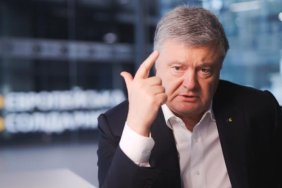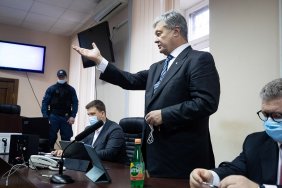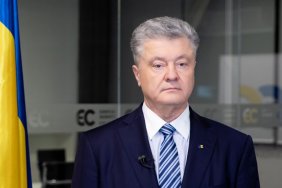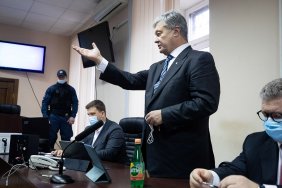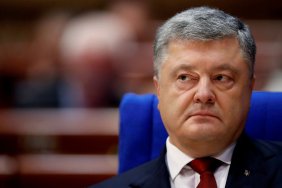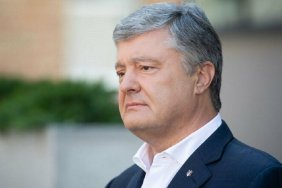


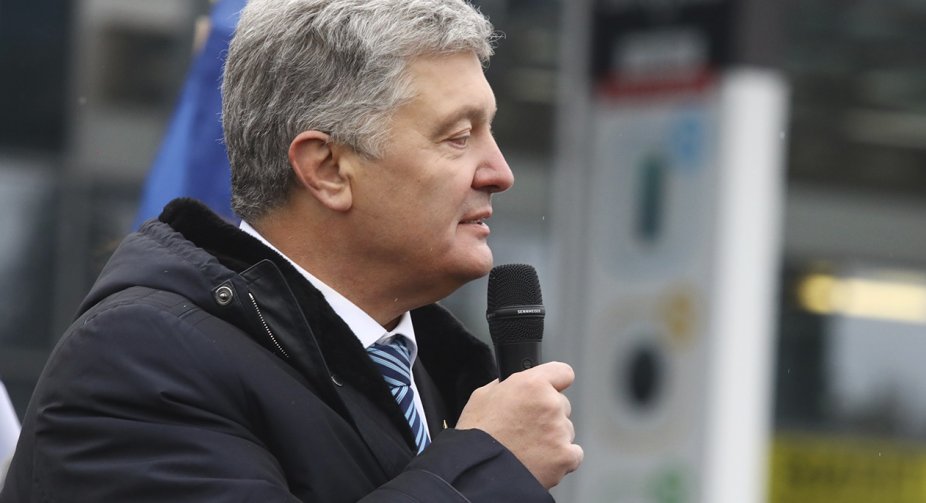

The Pechersky Court, which today is considering an application for a preventive measure for the fifth president of Ukraine, MP Petro Poroshenko, announced a technical break for 20 minutes.
Meanwhile, the State Bureau of Investigation reported details of the so-called "coal case" in which Poroshenko is involved. About this during a briefing on Monday told the advisor on communications of the GBI Tatiana Sapyan, reports the UNN correspondent.
"In September-November 2021 in this proceeding is already reported on suspicion people's deputy Viktor Medvedchuk, businessman Serhiy Koziar and former Energy Minister Volodymyr Demchyshyn. The pre-trial investigation established that the suspects in the aforementioned proceedings acted by prior conspiracy and facilitated the activities of the terrorist organization, committing deliberate actions to the detriment of the territorial integrity and inviolability, defense capability, state and economic security of Ukraine," Sapyan said.
Sapyan recalled that the SBU is investigating proceedings under Part 1 and Part 3 of Art. 258-5 (Financing of terrorism), Part. 1 of Article 111 (High Treason), and part 1 of Article 258-3 (Establishment of a terrorist organization) of the Criminal Code of Ukraine.
She added that on December 20, 2021 in this criminal proceeding the fifth president of Ukraine, people's deputy Petro Poroshenko was informed about the suspicion.
Thus, according to her, according to the investigation, in October 2014, representatives of the top political leadership of the Russian Federation decided to involve Medvedchuk Viktor Vladimirovich in subversive activities against Ukraine, who for a long time had close personal ties with the top political leadership of both Ukraine and the Russian Federation.
It is reported that Medvedchuk "reached an agreement with Petro Poroshenko, who, as president of Ukraine, had the necessary capabilities to administer the vertical of executive and legislative power.
Thus, the SBU noted, in August-October 2014, the government of Ukraine and the relevant SOEs took measures aimed at diversifying the sources of coal supplies.
At that time, according to Sapyan, "Viktor Medvedchuk and representatives of the top political leadership of the Russian Federation... developed a plan to facilitate the activities of terrorist organizations through the creation of an artificial shortage of coal for the needs of Ukraine's power generating enterprises during the heating season.
The SBU claims that Medvedchuk took on the function of communicator with the Russian Federation, while Poroshenko "left management and personnel issues to himself and, if necessary, administrative influence.
It is reported that in November 2014, according to investigators, Medvedchuk involved businessman Serhiy Kuzyara in the scheme, who reportedly had connections with representatives of the "LPR" and "DPR" and was familiar with the activities of coal mining companies in non-controlled territories.
It was assumed, according to the SBU, that the Russian Federation had originally created an artificial shortage of coal for Ukraine's power generating enterprises, for which purpose it had limited the volume of coal deliveries from its territory. The leaders of the terrorist organizations, in turn, identified one mining company each, which acted as suppliers of coal for power generating enterprises in Ukraine, and after receiving advance payments, they began shipping and supplying it, the GBR said.
"All this time Viktor Medvedchuk coordinated his actions with Russia's top political leadership and reported to his handlers in Moscow on the course of events and the progress of the plan," the GBR adviser said.
After that, according to her, Poroshenko's actions, in particular the doubts he expressed about the quality of the coal Ukraine received from the Republic of South Africa, created the preconditions and became the main reason for the termination of the contract with South Africa.
"After that, PJSC Centrenergo found itself in artificially created conditions in which it was able to import coal only from Russian enterprises, which allowed the top leadership of the Russian state authorities to proceed with their part of the criminal plan," Sapyan noted.
To this end, she said, the Russian Federation decided to block the supply of Russian coal to Ukraine, leaving the possibility of importing coal exclusively through the territory of Ukraine, which is temporarily controlled by representatives of the militants.
The adviser claims that "in pursuit of political interests, Poroshenko and Medvedchuk decided that it was necessary to provide operations for the purchase of coal from enterprises identified by terrorists in the form of normal economic activities through formal re-registration of their location and opening accounts" in Ukraine-controlled territory, passing them off as national producers of coal products.
Also from her words, according to law enforcers, Poroshenko contributed to the appointment of Demchyshyn as Minister of Energy, who, according to the GBR, promoted the scheme and overturned the decision of his predecessor, which defined work with enterprises "L/DNR" outside the law.
The GBR claims that at least UAH 205 million was spent for coal supplies from the VOT in 2015.
Poroshenko was reported on suspicion of treason and aiding terrorist organizations in criminal proceedings regarding the criminal scheme of supplying coal from the temporarily occupied territories and aiding terrorist organizations "L/DNR". The fifth president of Ukraine was summoned to the GBI on December 23, but he was abroad.
On January 6, Poroshenko announced that he would return to Ukraine on January 17. His lawyer claimed that there was an order to detain Poroshenko to bring him to court.
On January 6, the Kiev Pechersky District Court seized all of the property of the fifth president of Ukraine, Petro Poroshenko. The SBU expected that Poroshenko would be given a measure of restraint on the day of his return - 17 January.
Subsequently, the SBU clarified that a petition for a preventive measure in the form of detention for Poroshenko would be considered at 11 a.m. on 17 January 2022.