

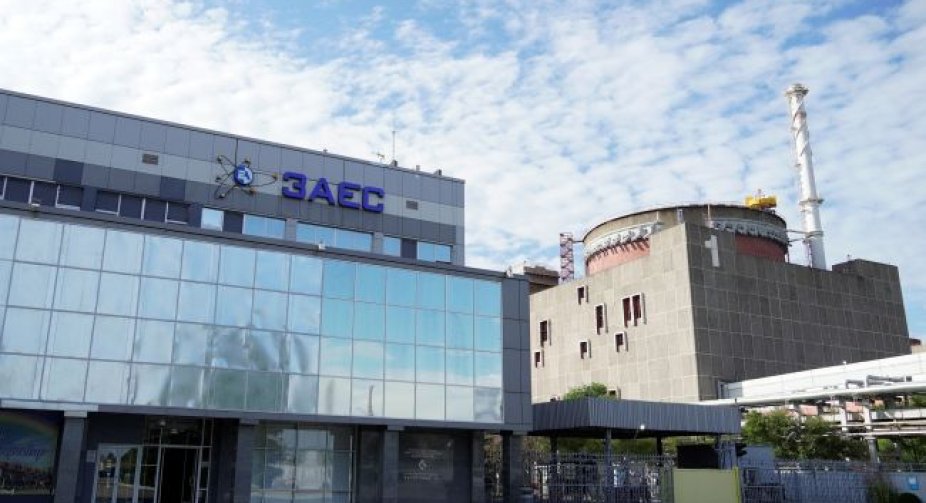

The Russian occupiers, after putting the fourth power unit of the Zaporizhzhya NPP into a hot shutdown, cooled down the fifth power unit.
This is reported by the International Atomic Energy Agency (IAEA) in a corresponding report.
As told by the IAEA, it was decided to cool down the fifth reactor of the ZNPP in order to carry out repair work on the power unit, which is possible only in a state of cold shutdown.
This happened three days after the Russians transferred the fourth power unit from a cold state to a hot one. Now, according to the IAEA, the steam from the fourth power unit is used to treat wastewater at the ZNPP. Other reactors are in cold shutdown mode.
At the same time, as noted by the IAEA, the organization's experts suggested installing an external steam boiler at the ZNPP in order to put all power units of the nuclear plant into cold shutdown mode.
In addition, IAEA experts, who are on the territory of the ZNPP, visited the fifth power unit yesterday to inspect the reactor housing, the spent fuel pool and the steam generator. According to them, all the equipment seemed to be in normal condition.
Experts of the organization also did not find any mines or explosives inside the power unit. However, mines still remain around the perimeter of the NPP. Also, the occupiers do not allow IAEA experts on the roofs of power units, where, according to Ukrainian intelligence, there may be explosives.
The situation at the ZANP
The Zaporizhzhya NPP has been under the control of the Russian occupiers since March 2022. Since then, due to Russian deliberate shelling, the nuclear power plant has been virtually cut off from the power grid, so almost all reactors have been put into cold shutdown mode. However, at the same time, the fifth power unit, which supported the life of the station, was in hot shutdown mode.
The other day, the occupiers also put the fourth power unit in a hot state, putting the NPP at risk. The fact is that after the explosion of the Kakhovskaya HPP and the emptying of the reservoir, it became practically impossible to fill the pool with water for cooling. And two reactors in a hot state could accelerate the drying of this pool, which would leave the ZNPP without cooling.