


A closed final report "On the work of the Russian part of the joint coordination center during the implementation of the Initiative" was prepared for the top military and political leadership of Russia. The document is devoted to the technologies that were used to hinder the operation of the grain corridor and ultimately led to the final termination of the agreement.
This was reported by the Main Intelligence Directorate of the Ministry of Defense of Ukraine in its publication.
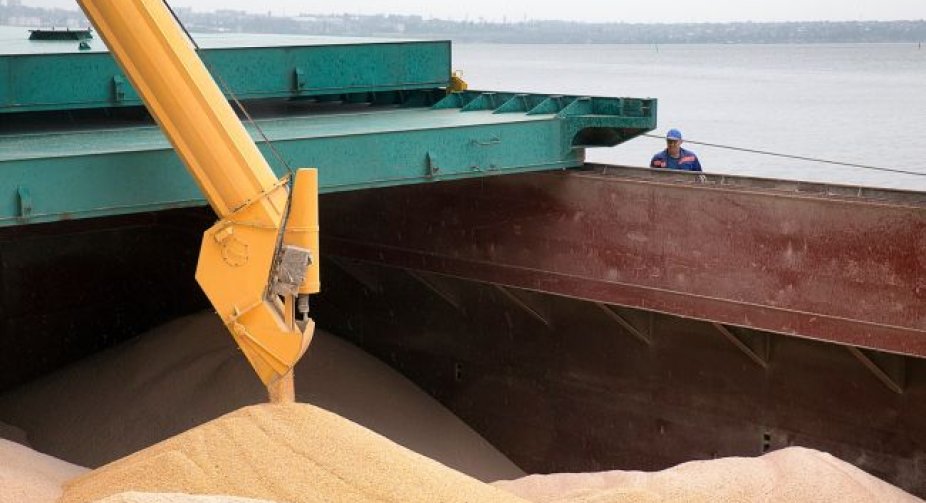
According to the report, the so-called "joint coordination center" saw its main task as the maximum reduction of the volume of grain exported within the framework of the "grain agreement".
In particular, the document states: "The quality inspection of ships was also one of the key elements of curbing the uncontrolled growth of grain exports from Ukrainian ports. At the same time, the activities of Russian inspectors were built in strict accordance with the developed methodical documents on the organization of ship inspections. According to the results of the inspections, participation in the Initiative was limited for 46 ships and the movement of 303 ships was restricted for a total period of 342 days."
Measures to disrupt the grain agreement "were divided into several stages," the GUR notes. At the first, on the initiative of the Russian president, the participation of the Russian Federation in the "grain agreement" was suspended from 10.29.22 to 11.03.22. This led to a drop in grain export volumes from 4.2 million in October to 2.6 million in November.
The next stage is measures to limit the admission of ships to the Pivdenny port, reduce the number of inspection teams (no more than two), and stop the registration of grain carriers.
These measures allowed the Russians to "effectively restrain the number of ships heading to Ukrainian ports and significantly limit the volume of food exports from Ukraine, which in general led to the impossibility of Kyiv exporting about 20 million tons of cargo." The Russians report that "the smallest amount of food exported from Ukrainian ports, 7.8 million tons, fell on the third stage of the Initiative (from March 19 to July 17, 2023).
Particular attention was paid to the disruption of grain supplies under the program of the World Food Program: "Ukrainians' attempts to use the Black Sea initiative to continue the so-called "Grain from Ukraine" program with the involvement of vessels chartered under the World Food Program have been stopped. The registration of such vessels took place only after the submission of written commitments not to participate in such actions."
In conclusion, the authors of the Report report: "The accumulated knowledge archive will allow, when solving similar problems, to achieve a high level of efficiency in the shortest possible time."
So, in case of continuation of the "grain agreement", the Russians will use all the accumulated "experience" to effectively disrupt the agreements.
"The document shows that all the actions to disrupt the "grain agreement" are part of a single pre-developed plan. And the targeted shelling of the Ukrainian port infrastructure is just another step in its implementation," said the GUR message.
Grain deal
Last week, the Kremlin announced its withdrawal from the "grain agreement", which had been in effect for a year and allowed the safe export of Ukrainian food from Black Sea ports.
After leaving the "grain agreement", Russia attacks the south of Ukraine almost every night. In particular, missile strikes are carried out on Odesa and the region.
In addition, on the night of July 24, Russian troops attacked the river port of Reni on the Danube, which is located near the border with Romania.