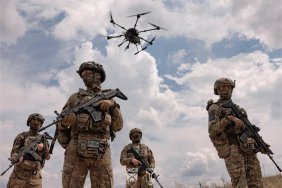


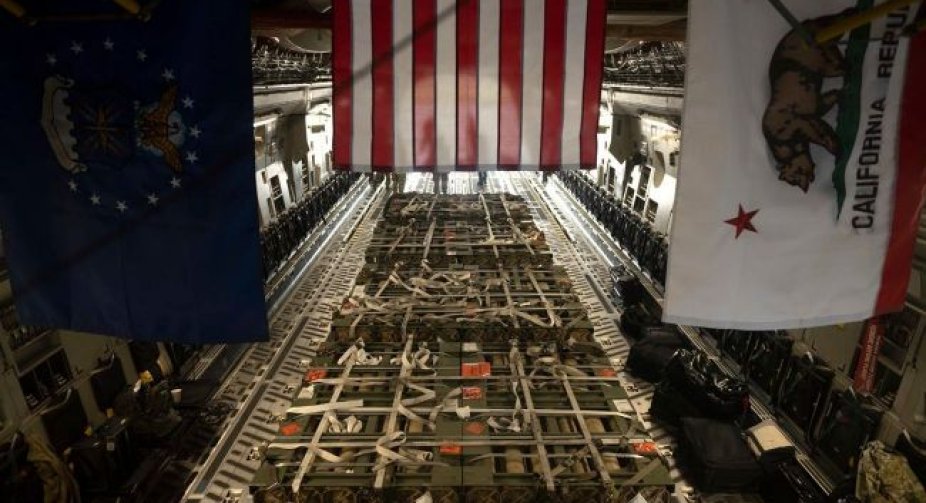

The United States of America (USA) plans to announce a new package of military aid for Ukraine in the total amount of up to 400 million dollars already on Tuesday, July 25.
This is reported by Reuters.
The package mainly consists of artillery, missiles for air defense systems and ground-based equipment as the Ukrainian military continues its counteroffensive, according to three U.S. officials.
It is also noted that the United States will not include cluster munitions in this package, two officials told reporters on condition of anonymity.
They also provided information on the weapons that will be included in the new package. It:
several Stryker armored personnel carriers,
demining equipment,
ammunition for national advanced anti-aircraft missile systems (NASAMS),
ammunition for highly mobile artillery rocket systems (HIMARS),
anti-tank weapons, including TOW and Javelin,
ammunition for anti-aircraft systems Patriot and Stinger.
The publication also notes that the package is still under development and may be subject to change.
It will be recalled that earlier this month the USA sent improved conventional dual-purpose ammunition (DPICM) to Ukraine - a cluster munition fired from a 155 mm gun.
Cluster ammunition for Ukraine
Recently, the USA transferred cluster munitions to Ukraine. American President Joe Biden said that such shells will help the Ukrainian military to continue its counteroffensive.
At the same time, the transfer of cluster munitions is a temporary solution for a transitional period until Western countries can produce more than 155 mm artillery shells of other types.
At the same time, Defense Minister Oleksiy Reznikov dispelled fears about the transfer of cluster munitions and named five main principles in their use. In particular, Ukraine will use projectiles only to liberate the territories of Ukraine, that is, it will not hit Russia.
The Russian Federation has been using cluster shells for a long time, killing the Ukrainian population.
It should be noted that the cluster munition emits bombs that can cover five times more territory than conventional munitions. They consist of dozens of smaller bombs and fly apart when detonated. Because of this, they can pose a danger to civilians for years after hostilities have ended.
It should be noted that the Washington Post reported on July 20 that Russian troops on the invasion fronts in southeastern Ukraine were attacked with controversial weapons.