

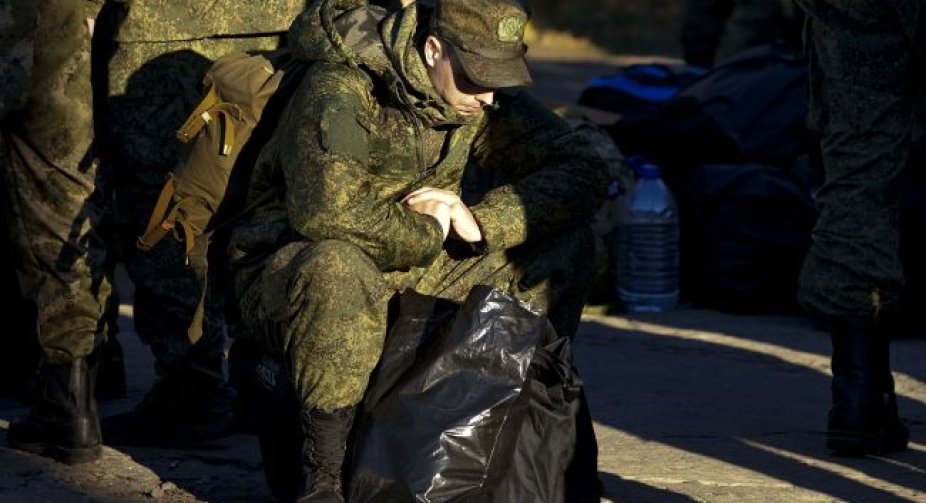

The occupiers continue to experience problems with supply, logistics and rotation in the south of Ukraine, which the commander of the 58th Combined Arms Army of the Russian Federation in the Zaporizhzhуа region, Major General Ivan Popov, complained about before his release. This leads to the refusal of soldiers to fight and surrender to the soldiers of the Armed Forces of Ukraine.
This was reported by analysts of the Institute for the Study of War in the ISW report.
The publication notes that the recent dismissal of Popov by the decision of the Ministry of Defense of the Russian Federation and the problems mentioned by him continue to affect Russian military operations in southern Ukraine, as well as the discussion of these operations.
A well-known Russian blogger connected to the Kremlin complained about the operations of the Defense Forces of Ukraine regarding the exhaustion of the Russian forces holding the southern regions against the background of the counteroffensive of the Armed Forces of Ukraine.
He also noted that the Russian military command did not solve the problems of rotation of forces, which Popov spoke about before his release.
Another well-known "military officer" supported the dismissed Russian general, pointing out that the problems outlined by Popov seem more important for the Russian Defense Ministry to solve than sending this commander to Syria or other measures to soften information.
Some Russian "soldiers" reinforced reports of the simultaneous capture by Ukrainian forces of several Russian assault groups numbering up to a platoon in the Zaporizhzhуа direction.
"Persistent problems with Russian logistics and operations in southern Ukraine may have contributed to the inability or unwillingness of these forces to fight and reports of further surrenders." - says the ISW report.
Key findings:
- The attack on the bridge across the Kerch Strait on July 17 is likely to have an immediate impact on Russian military logistics in southern Ukraine.
- The Russian Federation allegedly struck military facilities in southern Ukraine in "clear response" to the attack on the bridge across the Kerch Strait.
- The Armed Forces of Ukraine conducted counteroffensive actions in at least three sections of the front line against the background of intensifying Russian offensive operations and on July 18 achieved tactical success on the border of Kharkiv and Luhansk regions.
- Legislative manipulations continue in the Russian Federation to suppress internal dissent by introducing fear of criminal liability.
- The Telegraph concluded that the self-proclaimed president of Belarus, Oleksandr Lukashenko, and the Belarusian authorities are actively involved in the forcible deportation of Ukrainian children.
- Russian troops continued their offensive on the Kupyansk-Svatov border, southwest of Kreminnaya, in the Bakhmut and Avdiyivka-Donetsk districts, and achieved limited territorial success in all directions.
- The Armed Forces continued counteroffensive actions in the Bakhmut area and advanced north of Bakhmut.
- Ukrainian forces conducted counteroffensive operations in the western part of Donetsk Oblast - the eastern part and the western part of Zaporizhzhia Oblast, and reportedly made limited advances.
- Russian troops have conducted limited ground attacks in the western part of Donetsk Oblast and the eastern part of Zaporizhzhia Oblast, and recently made some progress in the western part of Zaporizhzhia Oblast.
- Some Russian sources have suggested that recent measures to support the development of the Russian Guard allow it to act as an alternative Russian military formation.
- The Russian Federation continues to formalize methods of social programming aimed at youth in the occupied territories of Ukraine.
The situation at the front in southern Ukraine
The Ukrainian military continues counteroffensive actions in a number of directions, including in Zaporizhzhia, Berdyanskyi and Tavriyskyi. Yes, the Defense Forces are advancing and improving their positions, but the liberation of the territories is not happening quickly due to the heavily mined terrain and strengthened Russian defense, which was pointed out by the commander of the Ground Forces Oleksandr Syrskyi in an interview with the BBC.
In parallel with this, the Armed Forces of Ukraine continue to attack Russian BC warehouses and logistics centers in the occupied territory in the south of the country.
As the British Ministry of Defense recently noted, the Russian invaders also suffer from a shortage of counter-battery radars.
About a week ago, the spokesman of the United Press Center of the Defense Forces of the Tavria Region, Valery Shershen, reported that the Armed Forces of Ukraine had captured a record number of Russian soldiers in this area.