

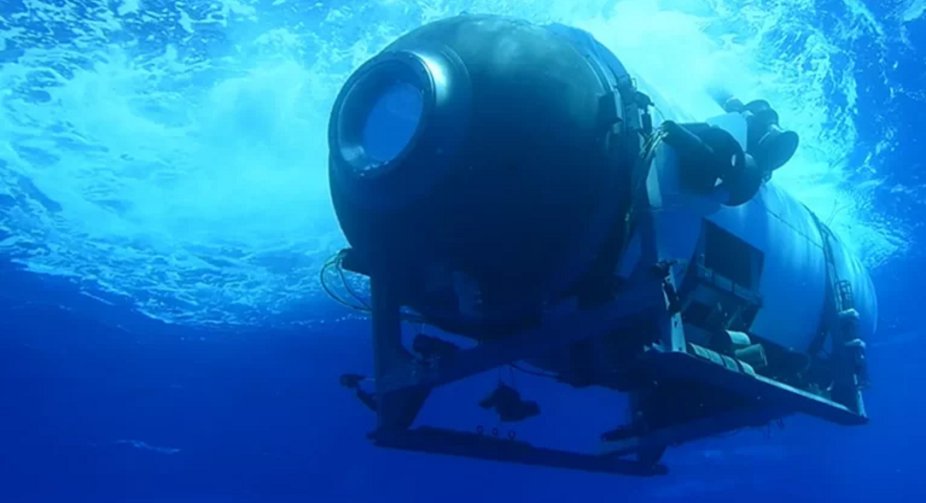

The US Navy's top-secret underwater acoustic system recorded the explosion of the Titan bathyscaphe a few hours after its submersion. This was reported by The Wall Street Journal, citing officials involved in the search operation.
An unnamed representative of the Pentagon told the publication that the US Navy began to listen to the area of the Titan's possible stay almost immediately after losing contact with it.
The acoustic system later recorded what it believed to be the sound of an explosion at the location where the wreckage was eventually found, the WSJ reports. The information was passed on to the search teams.
US and Canadian officials said rescuers "heard" several types of noise, including one believed to have caused the submarine to explode.
"It appears that the Titan exploded on Sunday en route to the Titanic shortly after contact was lost at a depth of about 9,000 feet (2,750 m)," said a source familiar with the matter.
In the evening of June 22, the US Coast Guard confirmed that they had found the wreckage of the missing Titan bathyscaphe, whose passengers were on their way to the site of the Titanic disaster. The part was discovered at a distance of about 490 meters from the bow of the sunken liner.
Crew members died. On board were British billionaire Hamish Harding, Pakistani businessman Shahzada Dawood and his son Sulaiman Dawood, Frenchman Paul-Henri Narjolet, who has studied the Titanic for more than 30 years, and OceanGate CEO Stockton Rush.
On June 19, it became known that the submarine Titan, on which tourists were going to the wreckage of the sunken Titanic, disappeared in the Atlantic Ocean. Oxygen on the ship was enough for 96 hours.
The submarine is only 6.7 meters long, 2.8 meters wide, and 2.5 meters high. Stockton Rush said the ship was operated with a video game joystick and assured that its design was safe. At the same time, according to media reports, former OceanGate employee David Loughridge was concerned about the "potential danger to Titan's passengers". The media also reported that the crew could not open the hatch from the inside without outside help.