

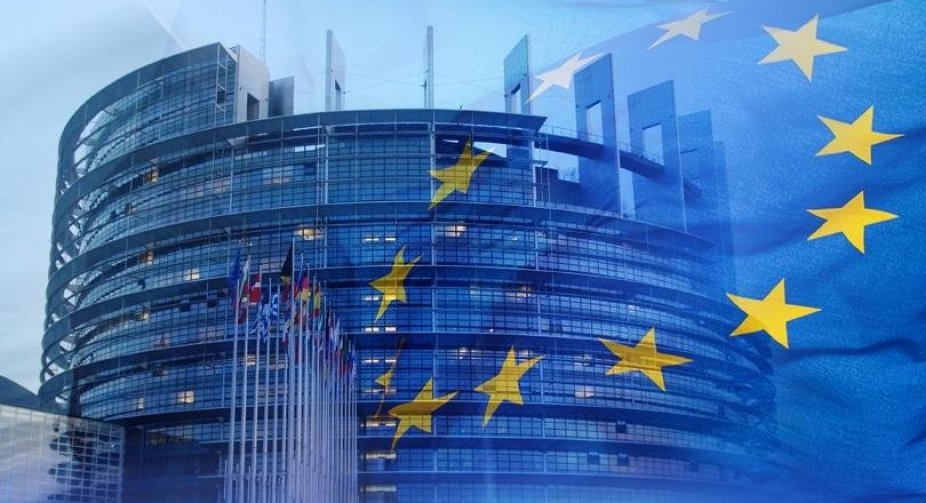

The European Union is getting closer to agreeing on a detailed plan to use frozen Russian assets for the reconstruction of Ukraine.
This is reported by CNBC.
The EU has confirmed that more than €200 billion and €20 billion of assets across the bloc alone are owned by the Russian central bank and Russian private individuals, respectively. These assets were frozen by European authorities after Russia's full-scale invasion of Ukraine to sanction the Kremlin for its aggression.
"We had rather long discussions (how to use these assets to pay for the reconstruction of Ukraine - ed.), - said the head of the EU special group on confiscation of Russian assets Anders Anlid.
He hopes that ideas will soon be put forward on how to use at least the income from these immobilized assets.
It is noted that the issue is purely technical, legally and politically complex.
The European Union is categorical that Russia should pay for the damage and pain it is causing to Ukraine. European Commission President Ursula von der Leyen reported back in November that the idea is to create a structure to manage frozen funds, invest them, and then transfer the proceeds to Ukraine.
At the time, she noted that those funds should also be used for reconstruction once the war is over and sanctions on frozen assets are lifted.
Officials are currently focused on the first step - using the proceeds from the assets of the Russian central bank. In their opinion, this will be the easiest way to avoid legal problems. At the same time, it is unclear how much money this will give Ukraine and how quickly Kyiv will receive it.
Economists agree that it is likely that the EU will be able to use the proceeds of Russian central bank assets legally, but there are wider concerns about how much this will actually help Ukraine.
Jacob Kierkegaard, a senior researcher at the Peterson Institute for International Economics, believes that the mechanism may work, but will not change the situation financially.
Restoration of Ukraine
According to the calculations of the World Bank, the recovery of the economy of Ukraine after the invasion of the Russian Federation will cost 411 billion dollars. Note that these are data as of May, that is, before the Russians blew up the Kakhovskaya HPP.
Let's add that in May the USA approved the transfer to Ukraine of the confiscated assets of the Russian oligarch Konstantin Malofeev. The US Attorney General at the time, Merrick Garland, said that this was the first transfer of confiscated Russian funds, but not the last.