


On June 12, Germany will start the largest-scale training of NATO member countries for air deployment over Europe, Air Defender 23.
This is reported by Bloomberg.
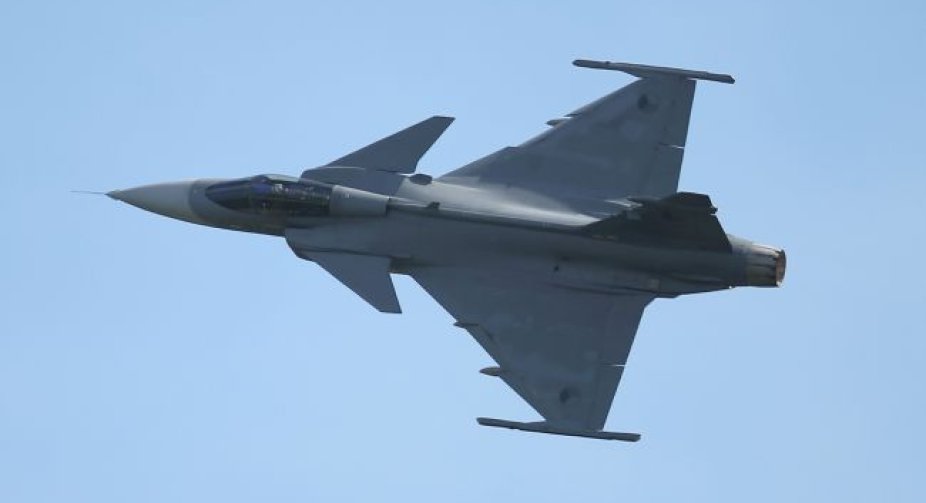
More than 20 partner countries and about 250 aircraft, including the F-35 produced by Lockheed Martin Corp., are participating in the exercises, which will take place on June 12-23. the USA and the Netherlands, as well as AWACS reconnaissance aircraft, aerial refuelers and even transport aircraft carriers from Japan.
It is noted that training will be held at four sites in Germany, as well as one each in the Netherlands and the Czech Republic.
The exercise will be conducted mainly in three airspaces in the north, east and south of Germany to test the air force's ability to respond to crisis situations in Europe amid heightened tensions with Russia.
Training areas will only be used for four hours per day. They will be closed to civil air traffic during this time.
Commercial flights through German airspace will be rerouted and may be slightly delayed.
The exercises are taking place at a time when the military alliance is planning a broader reconstruction of its defenses, which has become more urgent after Russia's full-scale invasion of Ukraine.
Strengthening NATO
After Russia's full-scale invasion of Ukraine, NATO countries began to strengthen their borders. A number of countries have increased their contingent on the Eastern flank of the Alliance by transferring additional equipment there.
Recently, NATO countries have conducted a number of exercises. Thus, large-scale military exercises have recently begun in Estonia, involving 50 ships of the member countries of the Alliance.
In addition, NATO countries have increased their defense spending. Alliance Secretary General Jens Stoltenberg calls on member states to spend at least 2% of their GDP on defense.