


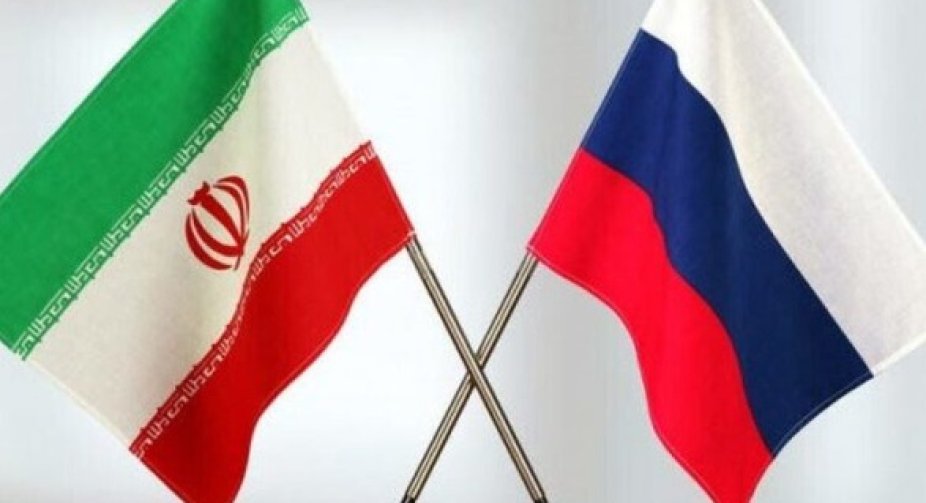

Iran sent Russia hundreds of drones used by the aggressor country to attack Ukrainian infrastructure facilities. Western officials are convinced that Tehran is open to further military cooperation with Moscow, but the latter will refrain from purchasing Iranian long-range ballistic missiles due to fears that Kiev's allies will provide ATACMS in response, reports the Financial Times.
The United States has recently raised reservations about deepening Russian-Iranian military cooperation, while European diplomats have expressed concern about Tehran. The US ambassador to NATO, Juliana Smith, said that the Western allies find this relationship "extremely troubling".
"This situation obviously worries all of us. It is a topic of conversation within the alliance. And we will continue to send signals to Iran about the danger of supporting Russia with material support in its attacks and war inside Ukraine," she said.
Such warnings are reportedly in line with Western actions since the start of Russia's full-scale invasion of Ukraine, when Kyiv's allies released an unprecedented amount of classified intelligence in an effort to undermine, deter and deter Russia and its potential allies. However, officials acknowledge that Moscow may change its stance on Iranian ballistic missiles as shortages of its own precision munitions become more acute and domestic production shrinks.
According to a European official, the Russian military was already concerned about its ability to sustain the war, as its stockpile of missiles and artillery had halved compared to the end of 2022. He added that the occupiers are in a "terrible situation, they need rockets."
Western officials and analysts told the FT that Tehran and Moscow had considered exchanging advanced Russian weapons for ballistic missiles, but those talks had stalled, in part because of the potential consequences of such a deal for both sides. Iran's Fateh-313 and Zulfiqar ballistic missiles have ranges of 500 km and 700 km respectively and will add mass, if not enhanced capabilities, to Russia's depleted missile stockpile.
"There have been discussions about ballistic missiles, but so far they haven't done it. The Europeans told them the consequences would be very serious. The US also drew a red line," said Crisis Group Iran Project Director Ali Vayez.
At the same time, military analysts said that the West's public warnings against Tehran would have limited impact given that wider sanctions had been announced against Iran. A representative of the US Department of Defense said that Tehran is "one of the few" that is "willing" to sell weapons to Russia.
US CIA Director William Burns said on February 26 that the alliance between Russia and Iran is "developing quite quickly" and called what is happening "disturbing".