


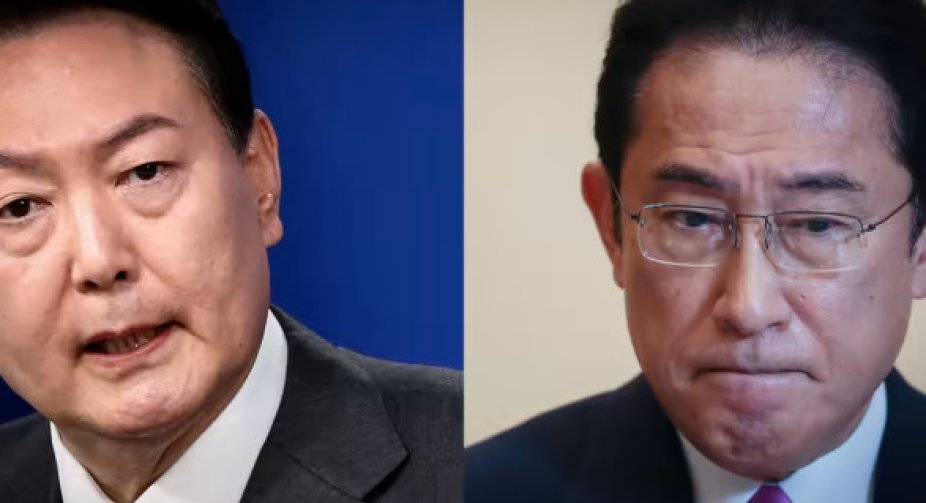

South Korea has announced that it will pay compensation to Korean workers who were forced to work for Japanese companies during World War II. The move should resolve strained relations between the two countries, Nikkei Asia reports.
"The government hopes that both South Korea and Japan will work together to develop a future-oriented relationship based on reconciliation and friendly cooperation, overcoming the unfortunate history in the past. This decision is in line with the strengthened state power and status of the Republic of Korea. The government will not leave this issue without regard and will take into account the suffering of our people," said South Korean Foreign Minister Park Jin.
He announced that a government fund will pay compensation to 15 victims who won court cases against Japanese companies Mitsubishi Heavy Industries and Nippon Steel in 2018. The fund will be created at the expense of donations from the private sector. The minister asked the Japanese government and companies to respond with comprehensive apologies and voluntary contributions. According to him, the leaders of the companies of the two countries are discussing how to promote the development of bilateral relations between Seoul and Tokyo.
Japanese Foreign Minister Yoshimasa Hayashi said he "appreciates the South Korean government's statement because it will help restore Japan-South Korea relations from a very difficult state to a normal one." Regarding Seoul's demand for a "sincere response," Hayashi stressed that his government "inherited the Japanese cabinet's position on historical recognition in general."
He added that while the Japanese government would not provide funds, Tokyo intended to uphold the position expressed by previous administrations, without using any specific terms. Previous administrations have expressed "remorse and apology." Nikkey Asia notes that Hayashi agreed to Japanese companies making voluntary donations, but said Tokyo "doesn't take a position." He added that the issue of export control "is a separate discussion" from the issue of wartime labor.
US President Joe Biden praised the agreement between the two countries, saying it "marks a groundbreaking new chapter in cooperation and partnership between two of the United States' closest allies."
"President Yoon and Prime Minister Kishida are taking an important step to create a more secure and prosperous future for the Korean and Japanese people. Once fully implemented, their steps will help us support and advance our shared vision of a free and open Indo-Pacific," - he noted. .
Japan and South Korea have had historical disputes stemming from Japan's 35-year occupation of the Korean Peninsula from 1910 to 1945.
Relations between the countries soured in 2019 when Japan imposed restrictions on exports of key goods to South Korea, citing a loss of trust and national security concerns. At the time, South Korea said Japan's move was effectively retaliation for a 2018 court ruling on compensation for former bonded laborers by Japanese firms.