


The State Duma approved the law on the suspension of participation in the nuclear disarmament treaty with the United States. Russian deputies supported Putin's initiative unanimously.
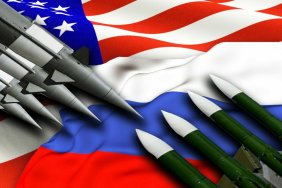
Deputies of the Russian State Duma (the lower house of the parliament) on Wednesday, February 22, unanimously approved a bill that provides for the "suspension" of the Russian Federation's participation in the treaty with the United States on the further reduction of strategic offensive weapons (СНО-3).
Russian President Vladimir Putin announced Moscow's intention to take such a step the day before. He justified the decision by the fact that other states continue to develop their nuclear weapons. The Russian leader also said that the United States was preparing to conduct nuclear tests and instructed to start preparations for such tests in his country.
The Secretary General of the North Atlantic Treaty Organization (NATO), Jens Stoltenberg, criticized these plans and called for their revision. "More nuclear weapons and less arms control make the world more dangerous," he said.
US Secretary of State Anthony Blinken also criticized this decision of the Russian Federation and noted that it is "deeply pitiable and irresponsible." "We will carefully monitor what Russia is actually doing," he emphasized.
The SNO-3 treaty is the only major arms control agreement in force between the United States and Russia. It provides for the reduction of both nuclear charges and means of their delivery. The agreement was signed in 2010 in Prague. In 2021, immediately after the inauguration of Joe Biden as the US president, the agreement was extended for another five years - until February 5, 2026. In August 2022, Russia announced a halt to inspections of its US nuclear facilities under the treaty, citing sanctions and the coronavirus pandemic.
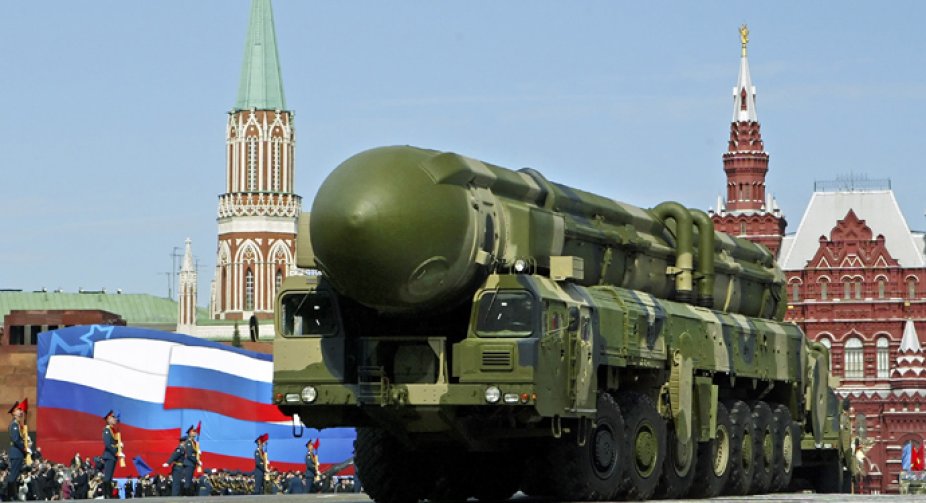
Meanwhile, it became known that the estimated number of deployed nuclear warheads in 2021 increased from 3,720 to 3,825; about 2,000 of them - almost all belonging to Russia and the USA - were in a state of increased combat capability.
This is evidenced by the report of the Stockholm Peace Research Institute (SIPRI).
"While the U.S. and Russia reduced their total nuclear weapons stockpiles by dismantling decommissioned warheads in 2020, both had roughly 50 more operationally deployed nuclear warheads in early 2021 than a year earlier."
Russia has also increased its total military nuclear arsenal by approximately 180 warheads, largely through the deployment of more land-based intercontinental ballistic missiles and submarine-launched ballistic missiles," the document said.
At the same time, it is emphasized that the deployed strategic nuclear forces of both countries remained within the limits of the Treaty on Strategic Offensive Weapons of 2010, although the treaty does not limit the total stockpiles of nuclear warheads.
It is noted that Russia and the United States together have more than 90% of the world's nuclear weapons. Both nations have large and expensive programs to replace and modernize their nuclear warheads, missile and aircraft delivery systems, and production facilities.
The other seven nuclear powers – Britain, France, China, India, Pakistan, Israel and North Korea – are also either developing or fielding new weapons systems, or have announced their intention to do so.