

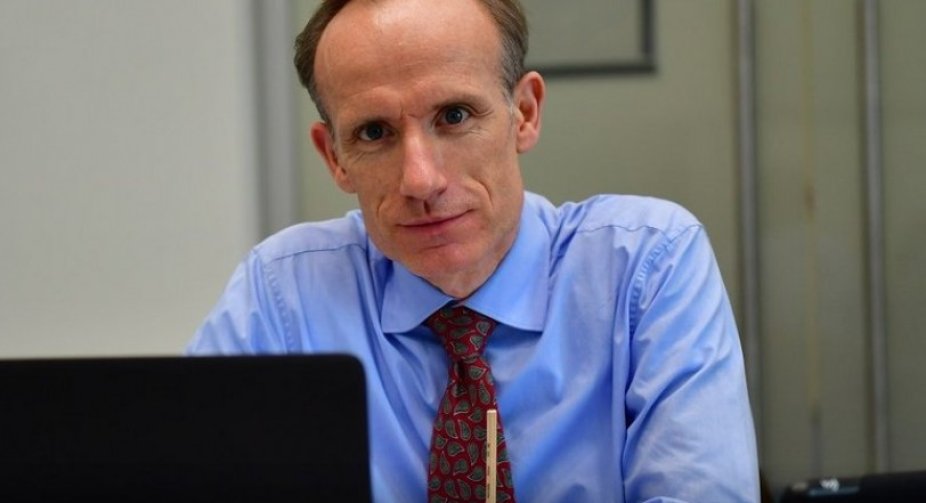

Professor Stefan Wolff is Professor of International Security at the University of Birmingham. His work focuses on international conflict management, especially in the context of geopolitics and great power rivalry in the post-Soviet space.
He is a co-coordinator of the OSCE network of think tanks and scientific institutions, a senior researcher at the Center for Foreign Policy and a founding editor of Ethnopolitics. He has published over 80 journal articles and book chapters and 20 books, including Ethnic Conflict: A Global Perspective (Oxford University Press, 2007). Wolff is also a regular contributor to The Conversation on international affairs. He holds degrees from the University of Leipzig (Erstes Staatsexamen), the University of Cambridge (MA in Philology) and the LSE (Ph.D.).
With the approach of the first anniversary (February 24) of Russia's illegal invasion of Ukraine, Professor Wolff commented:
"Among the three main consequences of the war at the moment, I would note that Ukraine turned out to be much more stable than most analysts expected. Ukrainian forces not only stopped the illegal seizure of Russian lands, they also recaptured important territories and carried out several tactical strikes. defeat from Russia. Second, the Western Alliance demonstrated unity in the face of Russian aggression and was strengthened by the firm commitment of all members to confront Russia. Despite some uncertainty about this, both the EU and NATO and their allies abroad did not succumb to Russian pressure, but remained committed to supporting Ukraine militarily, politically and economically, while simultaneously imposing unprecedented sanctions against Russia. And thirdly, despite on the recent achievements of Ukraine and significant international isolation of Russia, the tide has not yet settled, Russia remains a strong and unprincipled adversary, which is not afraid to break any international law by implementing its despicable program in Ukraine.
"As the war, which is now in its second year, develops, we will, firstly, likely see Russia trying to launch offensive operations to seize Ukrainian territory, continuing its attacks on critical national infrastructure in Ukraine aimed at undermining Ukraine's will. It is unlikely to succeed as long as Ukraine receives Western support, both military and economic. With this support, the country may be able to avoid both the collapse of its defense efforts and an even more serious humanitarian crisis. Second, if Ukraine and the West remain steadfast in their determination to prevent Moscow from pressuring Kyiv and Western capitals into "peace talks," the current stalemate is likely to last until spring. a de facto truce. We are likely to see more of what has happened in the past few weeks — drone and missile attacks from both sides, artillery and infantry fighting along the front lines, and civilian suffering. Third, since neither side will be able to break decisively from the current stalemate, both will be preparing for major offensive operations in the spring. Thanks to Western support, especially the supply of advanced air defense systems, increasingly powerful artillery systems, tanks and other armored vehicles, and possibly more powerful drones, as well as training for Ukrainian forces, Kyiv will be in a better position. than Moscow by the spring, but even this will not automatically ensure a quick defeat of Russia.'