


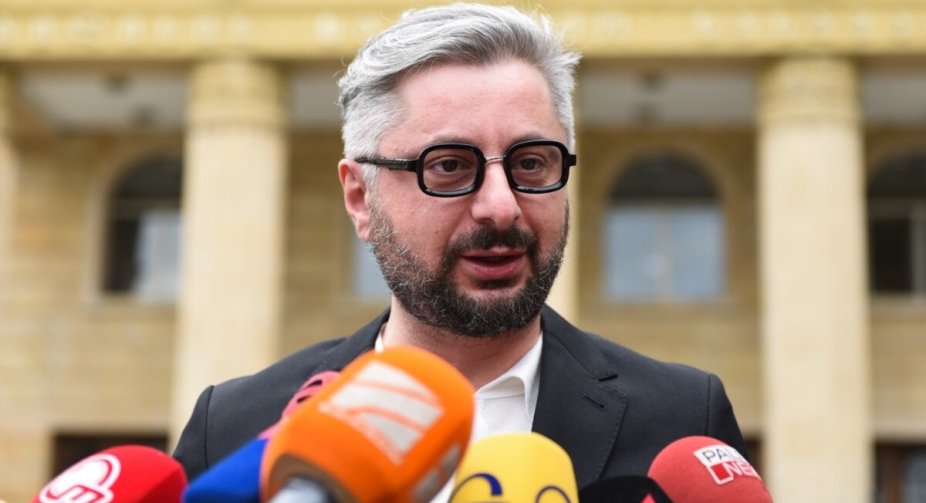

The Tbilisi Court of Appeal upheld the conviction against the general director of the opposition TV channel "Mtavari" Niki Gvaramiya. The decision was made by judges: Merab Zorbenadze, Lavrentii Maglakelidze and David Mamiseishvili.
On May 16 of this year, the Tbilisi City Court sentenced Gvaramii to 3 years and 6 months of imprisonment. The appellate court not only upheld this part of the sentence, but also partially satisfied the request of the prosecutor's office. In particular, Gvaramiy was sentenced to imprisonment for 3 years and 6 months and for another episode, for which the city court fined him 50 thousand GEL. The total term of stay of prisoner Gvaramiya has not changed.
Earlier, Gwaramiya said that he would go all the way, even to the European Court of Human Rights.
"I hope to get out. My fate is not decided only here, not only before the Georgian court, because the Strasbourg court is ahead," he said.
Gvaramia was dismissed from the position of general director of the Rustavi 2 television company on July 18, 2019 - the same day when the TV channel was returned to one of its former owners, businessman Kibar Halvashi, after long lawsuits and consideration of their legality at the European Court of Human Rights. In August of the same year, Gvaramiya launched a new opposition television company, Mtavari, which he heads to this day.
The prosecutor's office charged Gvaramia shortly after his dismissal from Rustavi-2. He was found guilty of two episodes of abuse of office (Article 220 of the Criminal Code of Georgia).
One of the episodes refers to an advertising contract concluded with the Porsche Center in February 2019, according to which, according to the prosecutor's office, Nika Gvaramiya and his family received an expensive car (€76,700), and the Rustavi-2 television company "significant material damage" was caused.
Regarding the second episode, in 2015, according to the prosecutor's office, the Rustavi-2 television company suffered losses in the amount of 6,763,510 GEL due to the advertising contract signed with the Inter Media Plus company.
Authoritative human rights organizations and opposition politicians regard Gvaramiya's case as politically motivated.