


This week, a joint meeting of EU ambassadors is taking place in Brussels. Its topic is the new reality that has emerged in the world in recent months and years.
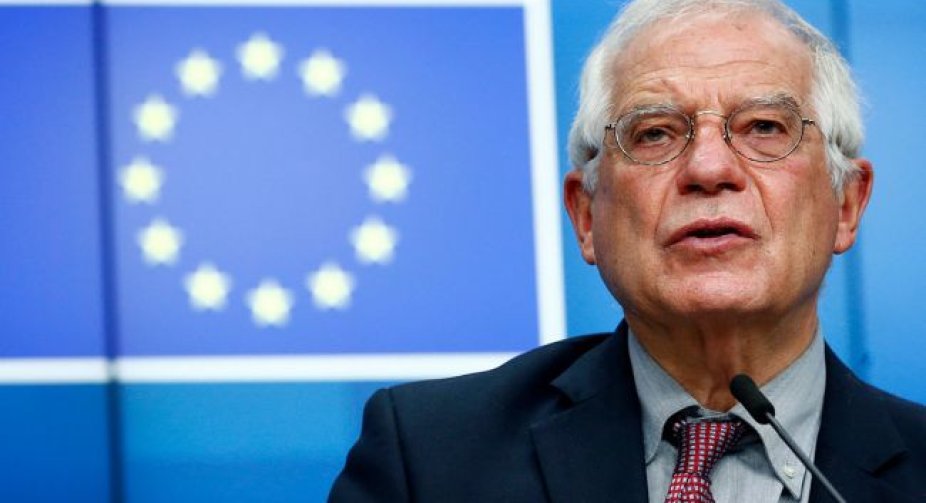
The meeting opened with a speech by the head of European diplomacy, Josep Borrell, which the EU decided to make public.
This shows that the European Commission and the EU Diplomatic Service have understood the need to be geopolitical players. This is exactly what Brussels will now demand from the ambassadors of the European Union.
"European Truth" made a translation of this language.
Briefly, what Josep Borel talked about:
"Uncertainty has become the rule. Events that should never have happened are happening one after another. At this rate, black swans, that is, exceptional events, will become the majority.
"Our [European] prosperity was based on China and Russia. Obviously, today we have to look for new energy paths within the European Union as much as possible, because we should not trade one dependency for another."
"The fact that Russia and China are no longer what they were for our economic development will require a strong restructuring of the economy."
"Adjustment to the new reality will be tough and it will create political problems."
"On the other hand, we have delegated our security to the United States ... who knows what will happen in two years (after the US presidential election) or even in November (after the midterm congressional elections)?"
"And if Trump or someone like him were in the White House now instead of Biden? What would be the US response to the war in Ukraine? What would be our response?"
These are the questions we have to ask ourselves. And the answer is obvious to me: we have to take more responsibility. We have to take on more of the responsibility in ensuring security."
"We have growing security challenges and our internal cohesion is at risk. And let's take a closer look at the last few months."
He called the war in Ukraine, China, world food and energy crises, and security problems in the European neighborhood factors of the global crisis.
Borrell also described three properties of the modern world.
"First, the world has entered a messy multipolarity. There is competition between the US and China, and it is "structuring". The world is being structured around this competition - whether someone likes it or not. Two great powers are competing, and this competition will restructure the world. It will coexist with wider division of the world into democracies and authoritarian states, but will not coincide with it."
"The second characteristic is that we have a competitive world in which everything becomes a weapon.
Weapons are energy, investments, information, migration flows, data, etc. There is a global struggle for access to strategic areas: cyberspace, maritime or outer space."
The third characteristic of this world is the rise of nationalism, revisionism plus identity politics.
Putin really does not want to restore communism, but uses the resource of radical nationalism and imperialism.
"We have to think more politically. We have to be more proactive, but more reactive. We have to connect these issues."
"We have to be faster and take risks. Sometimes I learned more about what is happening somewhere by reading newspapers than from the reports of EU missions.
You must be on 24-hour response mode. We live in times of crisis and we have to work in crisis mode. Be prepared to be bold by taking the initiative.
"Ultimately, it's about communication. Communication is our battlefield. We have to fight in communication. It's a battle we won't win if we don't fight hard enough. In addition to winning space, you have to win minds. The Russians and the Chinese are very advanced in this. They have botfarms that reach everyone in the world, that deliver and repeat the signals they need."
"We have to explain that there is a connection between political freedom and quality of life."