


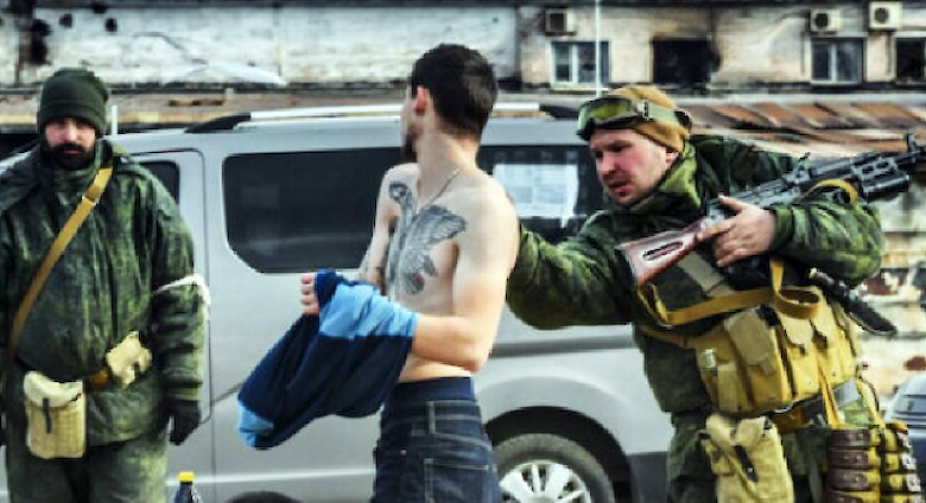

Russia has established 19 filtration camps along the border with Ukraine and in the temporarily occupied Ukrainian territories.
Courtney Ostrien, deputy head of the U.S. mission to OSCE, said this during a regular meeting of the OSCE Permanent Council in Vienna on Thursday.
"According to our assessment, Russia, with the help of proxy groups, is almost certainly using so-called filtration operations to conduct detention and deportation of Ukrainian civilians to Russia," she said.
The U.S. diplomat noted that Russian officials reportedly began preparing for the filtering process in Ukraine before February 24.
"Russian officials apparently created lists of Ukrainian civilians who were considered threats to Russia's control over Ukraine, including anyone with pro-Ukrainian views, such as politicians and activists, as well as members of the security forces, in order to detain and filter them. At least 18 filtration sites along the Ukrainian-Russian border have now been identified," said Courtney Ostrien.
In her statement, she drew attention to several horror stories of Ukrainian civilians who were deported to Russia after passing through these filtration camps. of the Far East from territories that Russia seized after February 24."
Citing eyewitnesses, she pointed out that Russian troops forcibly move these Ukrainian civilians to temporary filtration camps in schools, cultural centers, gyms, and other public buildings in Russian-controlled parts of eastern Ukraine and Russia, where Russian security forces subject them to harsh interrogations, often with searches and beatings."
The US diplomat noted that such cases should be documented so that all those who give orders or take part in these actions can be held accountable.
As is known, in the temporarily occupied Energodar, the Russian military kidnapped 20 townspeople, 11 of them were employees of the Zaporizhzhia NPP.
Earlier, ex-ombudsman Lyudmila Denisova said that more than one million 185 thousand Ukrainian citizens have already gone through filtration camps in the temporarily occupied territories, they were forcibly deported to the Russian Federation.
By the way, the Association of the Families of the Defenders of Azovstal urged international journalists to visit the colony in the occupied Yelenivka and show the conditions of detention of Ukrainian defenders.
At the same time, the Security Service of Ukraine found out that the Russian military abducts men in the temporarily occupied territories on a mass scale and demands a ransom. The amount for "return to normal life" ranges from 10 to 30 thousand USD.
Earlier, the SBU interrogated a captive Russian sniper. He told them that the Russian military went off to war, signing consent to kill civilians.