


A change in the current government in the Kremlin is possible under one of two scenarios. "Deputinization" or the collapse of Russia into many parts.
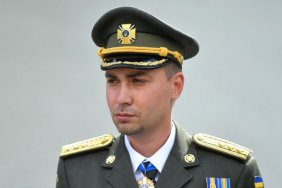
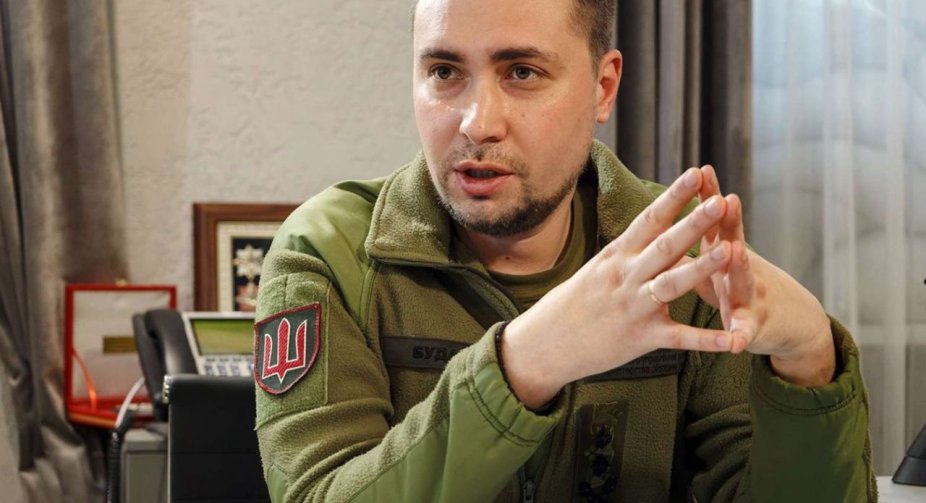
Kirill Budanov, head of the Main Intelligence Directorate of the Defense Ministry, told this in an interview with RBC-Ukraine.
According to him, the political and economic Russian elite has suffered enough from the sanctions, but will still wait for the "right moment" without creating protest moods on their own.
"The right (moment - ed.) for the right change (of the head of the Kremlin, - ed.). As they say, "succession,"" Budanov specifies.
At the same time, the head of Ukrainian intelligence refused to comment on statements about the "death of Putin".
"Is Putin alive now? A rhetorical question...I will refrain from that," Budanov noted.
He spoke about two scenarios for the overthrow of the current Russian authorities.
"There are only two possible outcomes. The first is that Putin's successor stops the main action, not only in Ukraine, but in many parts of the world. And says: "Please remove all the sanctions imposed on Russia, we are building new relations. Russia has nothing to do with it, there was a man who used to run the state, and it is his personal problems, he is a maniac," Budanov suggested.
That is, there will be a so-called "deputinization."
"Well, and everything is blamed on him (Putin - ed.). The other option is simply the breakup of Russia into several parts, into three or more," notes the head of the GUR.
Asked by a journalist whether the figures of Putin's "successors" are known, he replied that "this process is going on right now."
"It's very much a behind-the-scenes struggle. The Kremlin towers have to find some kind of consensus among themselves. And that's hard," Budanov said.
The intelligence chief declined to name those individuals. "No, we should not interfere with this process," Budanov concluded.
Also, Kirill Budanov noted that the end of the war with Russia should be Ukraine's withdrawal to its borders in 1991. This could happen as early as next year.
According to him, the first visible results of a turning point in the war will come in August of this year.
"At the end of the year, let's say a state in which active hostilities will diminish enough. But this will not be the end yet, you have to understand correctly what I am saying," explains Budanov.
The Ukrainian intelligence chief said that he would consider the end of the war exactly "the exit to the borders as of 1991."
"That will be the end of this whole adventure that Russia has undertaken," Budanov noted.
Asked by a journalist when the war might end and what it would take to do so, he replied, "Next year, I think so."
As a reminder, Ukrainian President Volodymyr Zelensky recently told the G7 leaders that he wanted Russia's full-scale war against Ukraine to end before winter and asked for help in doing so.
The United States responded that they considered this scenario unrealistic and named three scenarios.
At the same time, NATO is confident that Russia's war against Ukraine will be long-lasting, but the Alliance promises to help Ukrainians defeat the aggressor.
European leaders also repeatedly spoke about the risk of a "protracted" war by Russia against Ukraine.