


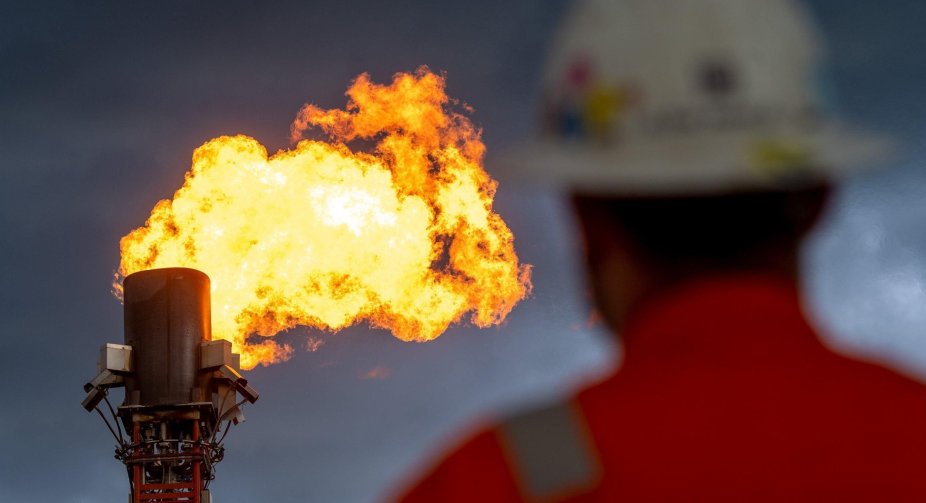

The world is awash with natural gas, driving down prices and creating a glut of fuel in both Europe and Asia -- at least for the next few weeks.
This is reported by Bloomberg.
This trend was not observed last year, as Russia's war against Ukraine upended energy markets and Europe decided to secure as many alternative sources of supply as possible.
Stocks are now being replenished from South Korea to Spain, largely due to mild winter weather and efforts to reduce consumption. Tankers filled with liquefied natural gas - a temporary solution to replace lost flows from Russian pipelines - now often struggle to find buyers, spending weeks idling at sea.
The demand for gas usually decreases as the heating season ends. The fuel then mostly goes into storage in preparation for the next season, but this year's European pumping could be completed as early as the end of August, Morgan Stanley said.
"There appears to be a short-term glut of gas that should keep pressure on LNG prices for the next few weeks, which could lead to a slight dip in benchmarks," said Thelon Custer, energy analyst at Bloomberg Intelligence.
While gas prices in Europe and Asia have fallen sharply from last year's highs, they are still well above their ten-year average, raising concerns that the current glut could disappear. Custer says prices "could be close to the floor" as lower gas prices could stimulate additional demand.
All attention is focused on summer weather, as any extreme heat and drought can increase consumption. According to Custer, at the beginning of the third quarter, importers will start preparing for winter, intensifying the competition for LNG supplies. But so far the surplus is increasing.
According to RBC Capital Markets, Spain, home to the largest number of LNG terminals in Europe, already has gas storage at 85% capacity, meaning the domestic market could quickly become congested and affect spot prices.
In Finland, the number of reception slots for LNG imports for the summer period was reduced from 14 to 10, partly due to an expected decrease in demand. Europe has been quick to install mobile LNG import terminals as it has reduced dependence on Russian pipeline gas, with more to come this year and next.
Meanwhile, global LNG exports rebounded to a record high in March, thanks in part to a recovery in U.S. production. The extra supply is pushing prices down as traders scramble to find buyers for supplies.
UK gas exports to the continent are on the rise as the country runs out of large storage facilities and LNG continues to flow in at a record pace. In addition, China has seen record re-exports of LNG amid a slow recovery from the lifting of pandemic restrictions, with some vessels avoiding another major LNG importer, South Korea. Japan, a major buyer, is also offering to sell lots to prevent oversupply domestically.
However, scheduled annual maintenance of gas facilities from the end of April until the summer may put an end to the oversupply. There are other risks associated with a further reduction in supplies from Russia or unexpected shutdowns. Global LNG supplies are expected to remain tight for another two years.
This is reflected in forward prices, which will increase in the coming months, especially in winter, and will remain high until the beginning of 2025.
"By 2023, the European gas balance is much more fragile than last year," the French Institute of International Relations said in a note. "Any small supply disruptions could have serious consequences."
As a reminder, gas prices in Europe fell by more than 80% to $450 per thousand cubic meters compared to the August peak (over $3,500 per thousand cubic meters).