

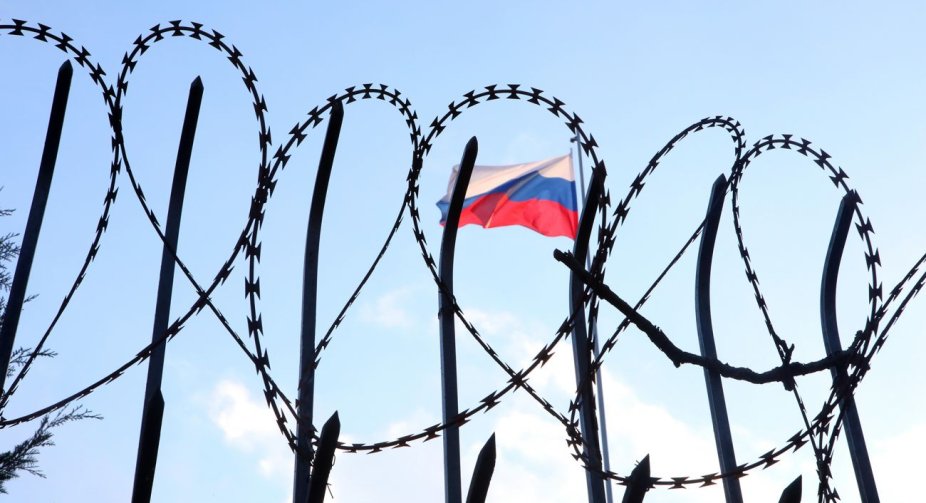

Brussels has accelerated work on the tenth package of sanctions against Russia - member states want to adopt the new package before the Ukraine-EU summit in Kyiv, scheduled for early February.
The Polish news agency PAP learned about it.
The ninth package of EU sanctions was adopted in December. Although member states favoring a tougher sanctions policy against Russia were not entirely happy with the decision, its adoption was driven by the belief that the EU should demonstrate unity on this issue at the end of the year.
As a result, some countries agreed to make concessions and give up some of their demands in order to reach a consensus among the 27 EU member states.
Work on the next package has been gaining momentum in Brussels in recent days, with EC President Ursula von der Leyen hinting at the issue on Tuesday. "We will pressure the Kremlin with sanctions as much as necessary. We will extend sanctions to those who militarily support Russia's war, such as Belarus and Iran," she said, without elaborating.
Information from PAP sources suggests that this rhetoric is, however, followed by concrete. This was confirmed by the Permanent Representative of Poland to the EU, Andrzej Sadosz. "The work has really accelerated. Poland in the group of like-minded countries is now proposing further sanctions. Strengthening existing restrictions is also an ongoing process," he said.
According to the EU diplomat, the reason for the acceleration is the upcoming Ukraine-EU summit, and the catalyst is the approaching anniversary of the war.
EU diplomats are reluctant to talk about the details of the new package because, they stress, it is important not to lose the effect of surprise.
"An attempt is being made once again to extend sanctions on the export of Russian diamonds. The cost of diamond exports to the Russian budget is estimated at 4.5 billion euros. This is a considerable amount," the EU diplomat said. The new sanctions will also apply to products that could potentially be used by the Russian military. Sanctions lists are also planned to be expanded to include more individuals responsible for Russia's aggression against Ukraine and war crimes.
Belarus will also be subject to new sanctions for continuing to support Russia's military actions against Ukraine. In this case, according to one of the diplomats, it is about "synchronizing Belarusian sanctions with Russian ones, especially sectoral ones, in those areas where Minsk cooperates with Moscow in military terms."
Adoption of sanctions in the EU always requires unanimity. In this context, some diplomats fear that Hungary may delay the adoption of new restrictions, as it has done in the past.
The Hungarians have already declared that they will not agree with some names on the sanctions lists. It is expected that there will be further tensions in relations with Budapest, the EU representative said.
It will be recalled that the head of the Ministry of Foreign Affairs, Dmytro Kuleba, advocated that in 2023, the West would impose sanctions against the Russian Patriarch Kirill (Voladymir Gundyaev) and lead to the fall of Russia's defense complex.