

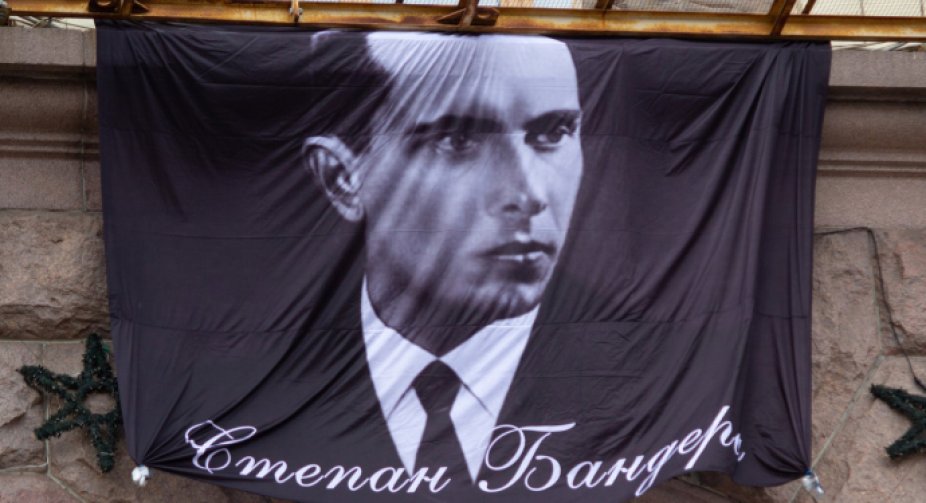

The post for the 114th anniversary of the birth of Stepan Bandera disappeared from the Twitter account of the Verkhovna Rada of Ukraine after the conversation between the Prime Ministers of Ukraine and Poland.
This was stated by Poland's Deputy Minister of Foreign Affairs, Arkadiusz Mularczyk, PAP reports.
"This is a sign that Ukrainians listened to our voice. I want to make it clear that the glorification of Stepan Bandera, an ideologue of Ukrainian nationalists who killed tens of thousands of Poles in Volyn, is unacceptable on the part of the Polish state," he said.
Mularchyk added that Ukrainians should realize that what the Polish government and the Poles are doing now has much more significance for independent, sovereign Ukraine.
At the same time, he noted that the Poles "still have work to do" because, in his opinion, many Ukrainians do not know about the events in Volyn. "I am convinced that the time will come when this issue will be clarified in the relations between our countries," Mularchyk said.
The Polish RAR agency previously reported that on January 1, a photo of the Commander-in-Chief of the Armed Forces of Ukraine, General Valery Zaluzhny, was published on Twitter of the Verkhovna Rada under the portrait of the leader of the UPA.
The post was allegedly accompanied by several quotes from Bandera and the words: "The current struggle is against the Russian Empire. And these directives of Stepan Bandera are well known to the Commander-in-Chief of the Armed Forces" (EuroPravda did not find such a post on any of the pages of the Verkhovna Rada in social networks).
On January 2, Polish Prime Minister Mateusz Morawiecki announced that he would discuss with his Ukrainian colleague Denys Shmygal the issue of "heroization" of Stepan Bandera on the official pages of Ukrainian authorities.
The figure of Stepan Bandera has been a reason for discussions in Polish-Ukrainian relations before. In Warsaw, he is considered to be involved in the so-called Volhynia tragedy of July 1943, which is called the genocide of the Polish population, as well as the promotion of unfriendly attitudes towards Poland.