


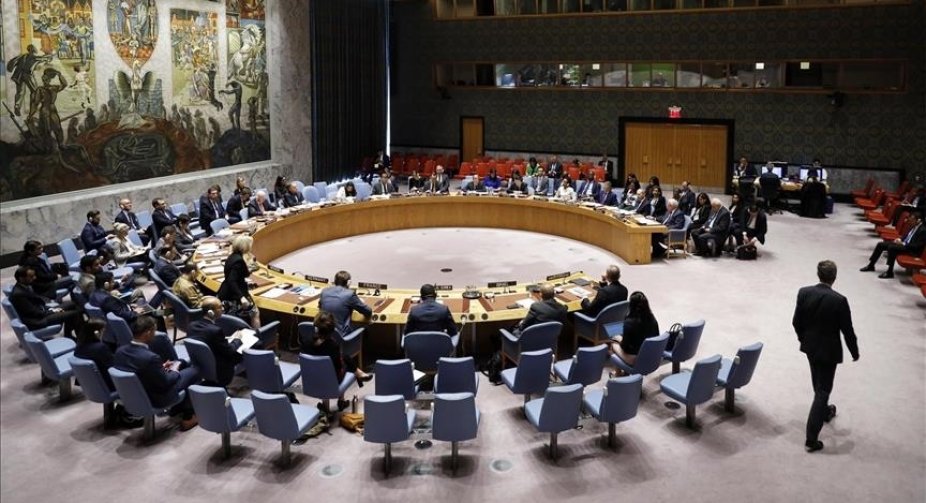

According to the Vice-Chancellor of the Ministry of Foreign Affairs of Estonia Märt Volmer, the majority of states do not share Ukraine's approach to the issue of Russia's membership in the UN Security Council, so the issue of its exclusion from this body is not yet promising. This is reported by the ERR portal.
The Ministry of Foreign Affairs of Ukraine said this week that Russia illegally joined the United Nations and took the USSR's place among the permanent members of its Security Council.
According to Volmer, this interpretation is shared by few countries.
"Estonia is one of the leaders and the most active supporters of Ukraine on issues related to the isolation of Russia in various organizations, the removal of Russia from decision-making in the world, and holding it accountable for crimes. This direction is very good and correct. Talks about the UN fall into the same category, but in this case it should be taken into account that, unfortunately, Ukraine does not have a lot of international support on this issue," said the vice-chancellor of the Ministry of Foreign Affairs of Estonia.
"This (consideration of the issue of the exclusion of the Russian Federation from the UN Security Council) would be possible if a very large number of states thought the same as Ukraine, that after the collapse of the Soviet Union, Russia acquired this status in some way outside the procedure, illegally, and this should somehow revise it. But there are essentially no states that would consider it possible and necessary," he added.
In this regard, according to the diplomat, this issue is still hopeless, and one should focus on those aspects of international life in which Russia can really be suppressed and isolated.
"If it actually came to the point where it was put to a vote in the Security Council, Russia would obviously block it. That's obviously one of the reasons why most states now don't think it would be a very realistic course of action Russia should rather be hindered where it can actually be done, where it has some support, where we can push it away from decision-making processes in the world," Vollmer said.