


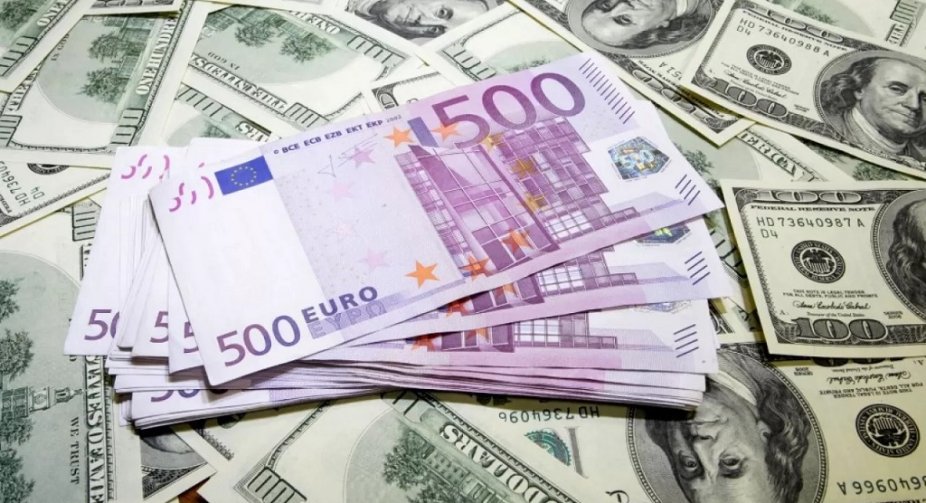

In the world market the dollar and euro quotes have flattened because of the risks of recession in the euro area and the rapid increase in key U.S. interest rates. This is known from Investing data.
After the euro reached parity with the dollar after a long decline at about 12:00 in Kyiv, the euro "bounced" up again and by 14:00 it was already at 1.0026 per dollar. The last time the euro and the dollar were at parity was in November 2002.
The euro has been declining against the dollar for several weeks, and traders are increasingly talking about the inevitability of parity between the two currencies. The reason is the growing risk of recession in the euro area against the background of the cessation of gas supplies from Russia to Europe.
Restricted supplies would mean the possibility of rationing of gas consumption by the EU countries, which would lead to a drop in production and, consequently, in the economy as a whole. Such an economic shock leaves the European Central Bank with the question of how to strengthen its monetary policy to curb a decade of record inflation in the bloc, while not pushing an already weakened economy into recession.
It is likely that the interest rate differential between the ECB and the U.S. Federal Reserve will widen, which will entail more capital flight from the EU. As Andy Bloomfield, head of macro research at Record Currency Management, told us earlier, large amounts of capital have already moved into the U.S.