

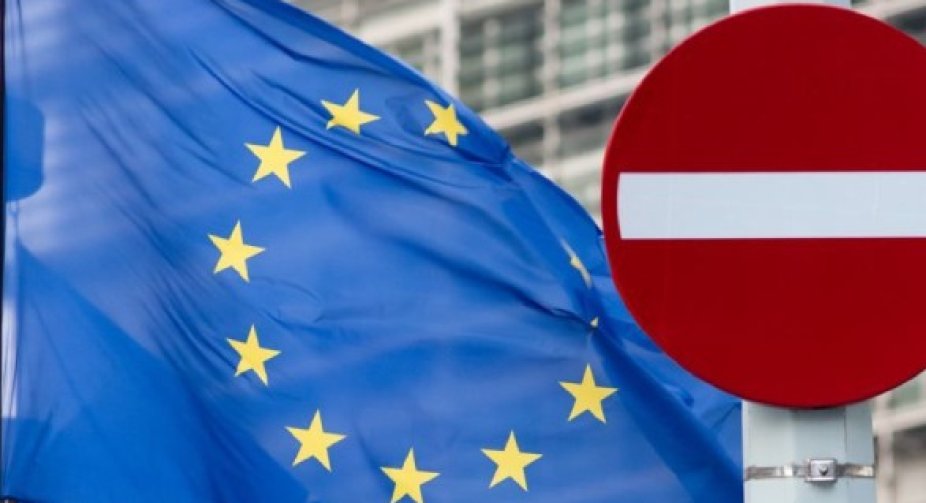

The Council of the European Union officially announced that the EU adopted the fifth package of sanctions against Russia, which included a coal embargo, which will work only in August 2022. At the same time, the European Commission indicated that it was discussing restrictions on Russian oil imports.
"In light of Russia's ongoing war of aggression against Ukraine and reports of atrocities committed by Russian armed forces in Ukraine, the EU Council today decided to impose a fifth package of economic and individual sanctions against Russia," it said.
The agreed package includes a number of measures designed to increase pressure on the Russian government and economy, as well as to limit the Kremlin's resources for aggression, the EU Council indicated.
At the same time, the European Commission indicated that "the European Commission and the European External Action Service are working on additional proposals for possible sanctions, including on oil imports, and are considering some ideas submitted by member states, such as taxes or specific payment channels such as a deposit account."
"These latest sanctions were adopted after the atrocities committed by the Russian armed forces in Bucha and other places that are under Russian occupation. The purpose of our sanctions is to stop the reckless, inhuman and aggressive behavior of Russian forces and to make it clear to decision-makers in the Kremlin that their illegal aggression is costly," said Josep Borrel, EU High Representative for Foreign Affairs and Security Policy.
The package includes:
- A ban on the purchase, import or transfer of coal and other solid fossil fuels to the EU if they originate in or are exported from Russia, effective August 2022. Coal imports into the EU currently total 8 billion euros per year.
- a ban on granting access to EU ports to ships registered under the Russian flag. Waivers are granted for agricultural and food products, humanitarian aid and energy.
- A ban on any Russian and Belarusian road transport companies, preventing the carriage of goods by road within the EU, including in transit. However, waivers are granted for a number of products, such as pharmaceutical, medical, agricultural and food products, including wheat, as well as for road transport for humanitarian purposes.
- further export bans targeting jet fuel and other products such as quantum computers and advanced semiconductors, high-tech electronics, software, sensitive equipment and transportation equipment, as well as new import bans on products such as wood, cement, fertilizers, seafood and alcoholic beverages. The agreed export and import bans amount to only €10 billion and €5.5 billion, respectively.
- a number of targeted economic measures aimed at strengthening existing measures and closing loopholes, such as: a general EU ban on the participation of Russian companies in public procurement in member states, exclusion of any financial support to Russian state bodies, an extended ban on cryptocurrency deposits, and sales of banknotes and transferable securities denominated in any official currency of EU member states, Russia and Belarus or any individual or entity, organization or body in Russia and Belarus.
In addition, the EU Council decided to impose sanctions against companies whose products or technology played a role in the invasion, key oligarchs and businessmen, high-ranking Kremlin officials, supporters of disinformation and information manipulation who systematically spread the Kremlin's narrative of Russian military aggression in Ukraine, and family members of those already under sanctions to ensure that EU sanctions will not be circumvented.
In addition, a total ban on transactions with four key Russian banks, which account for 23% of the Russian banking sector market, is being imposed. After being disconnected from SWIFT, these banks are now subject to an asset freeze, so they will be completely cut off from EU markets.
"The relevant regulations will soon be published in the Official Journal," the EU Council pointed out.