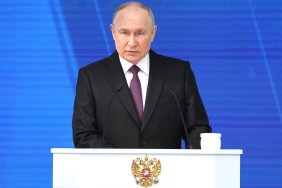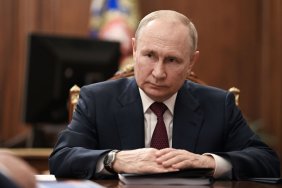


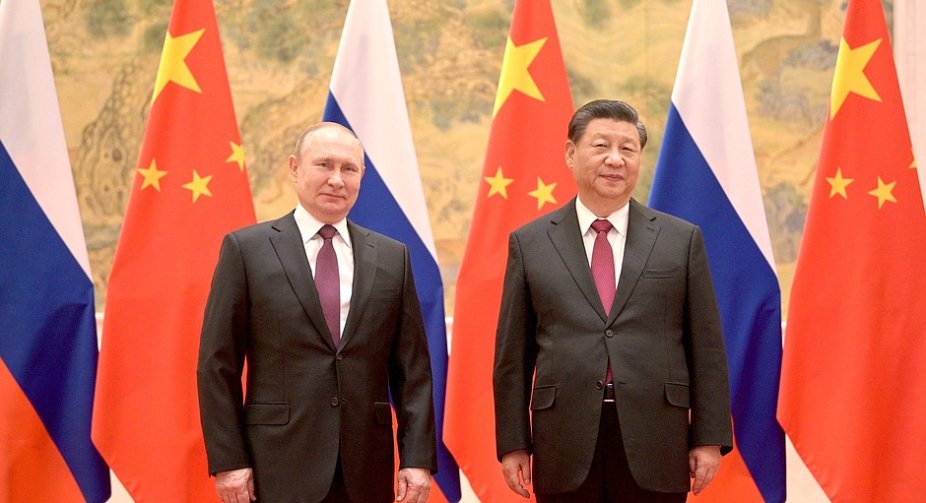

Russian and Chinese leaders Vladimir Putin and Xi Jinping issued a joint statement following their meeting in Beijing. In particular, they accused NATO of "inflating confrontation" and spoke in favor of non-expansion of the Alliance. According to the website of the Kremlin.
Russia and China spoke out against the actions of external forces to allegedly "undermine security and stability in joint adjacent regions."
They accused NATO countries of intending to oppose interference in the internal affairs of sovereign countries, which "oppose 'color revolutions' and will increase cooperation in the aforementioned areas."
The parties stated that individual states, military-political alliances or coalitions aim to "gain direct or indirect unilateral military advantages to the detriment of the security of others", allegedly by methods of unfair competition.
They accused NATO countries of "fomenting antagonism and confrontation," which allegedly seriously undermines the international and global strategic stability order.
"The parties oppose further expansion of NATO, call on the North Atlantic Alliance to abandon ideologized Cold War approaches, respect the sovereignty, security and interests of other countries, the diversity of their civilizational and cultural-historical patterns, and treat the peaceful development of other states objectively and fairly," the statement said.
Meanwhile, China expressed its "understanding" and supported Russia's proposals on establishment of long-term legally binding "security guarantees" in Europe.
Moscow and Beijing said that "attempts to draw dividing lines based on ideology and create ad hoc alliances" do not meet the principles of democracy.
"The parties note that democratic principles are implemented not only in domestic governance, but also at the global level. Attempts of individual states to impose their "democratic standards" on other countries, to assign a monopoly right to assess the level of compliance with democratic criteria, to draw dividing lines on ideological grounds, including through the creation of narrow blocs and situational alliances, are in fact an example of flouting democracy and retreat from its spirit and real values," said the joint statement.
According to Moscow and Beijing, "such attempts to act as a hegemon pose a serious threat to global and regional peace and stability and undermine the stability of the world order.