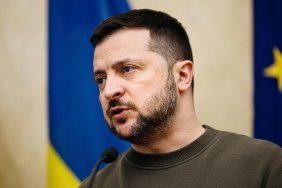


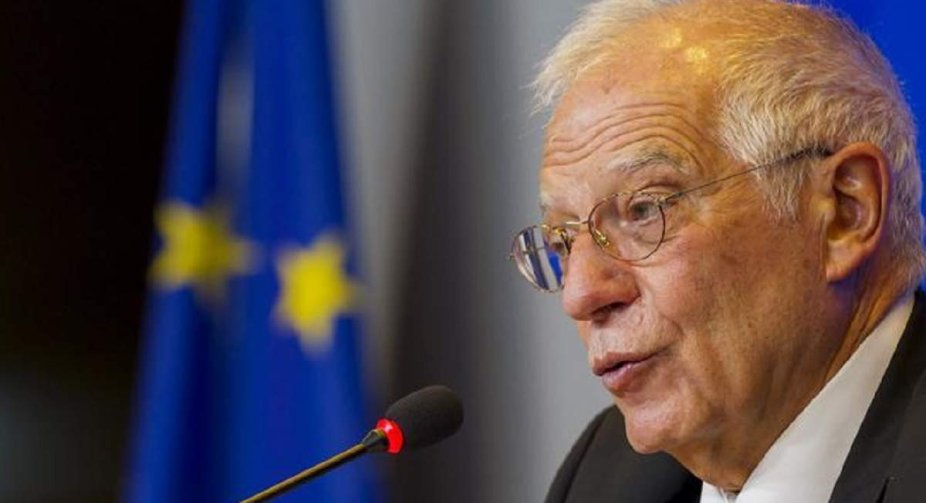

The time has come for the EU countries "to show firmness and unity in order to resist Russia's attempts to destabilize Ukraine, said EU High Representative for Foreign Affairs and Security Policy Josep Borrell in his blog on Sunday, December 19, reports DW.
"We know that mere words and statements are not enough to change the calculations of the Russian leadership," which pulls troops to the borders of Ukraine, "- said the head of EU diplomacy. That is why, he added, it is so important that European leaders decided to extend existing economic sanctions and "warned Russia of serious consequences in case of any action against Ukraine."
The crisis near Ukraine's borders is unfolding against the background of extremely high energy prices, Borrel noted: in December alone, gas prices increased by 40 percent, and compared to summer the increase was 300 percent.
According to the diplomat's assessment, Moscow is using energy resources as an instrument of political influence, such as what happened in Moldova. "And although, strictly speaking, Russia fulfills its obligations to supply gas, many see its refusal to increase exports to Europe or to restock the storage facilities owned by Gazprom as a way to pressure the EU. First of all - to obtain a license for the launch of the Nord Stream-2 pipeline," he said.
Borrell added that the European Commission does not consider this project a priority. According to him, the pipeline "continues to be an issue for discussion" and "must in any case meet the requirements of European regulations.
Speaking about the rising tensions near Ukraine's borders, the diplomat said Moscow's ultimate intentions toward Kiev are not clear, "except that it threatens Ukraine and seeks to weaken it." "Different scenarios are possible...We need to hope for the best and prepare for the worst," he stressed.
Borrell also mentioned the Russian Foreign Ministry's list of demands with the U.S. and NATO on "security guarantees." The European Union should participate in such discussions, Borrell said, pointing to the key principles of European security policy laid down in the Helsinki Final Act and the Charter of Paris: "The OSCE offers mechanisms and rules that remain the cornerstones of any interaction with Russia.
The tensions with Russia, as well as the "brutal, repressive and illegal nature of Alexander Lukashenko's regime" in Belarus, according to Borrell, clearly demonstrate the threats Europe faces. Among them are "hybrid tactics, power politics, intimidation and disinformation. "At stake is not only the fate of individual countries and societies," the diplomat notes, "but also the more general principles that underpin the European security structure.
Against this background, Borrell said, it is "imperative that the European Union build up its security capabilities." In January, he intends to present an updated version of the European security concept "Strategic Compass" to the foreign ministers and defense ministers of the EU. The first line in the preface to the document reads: "Europe is in danger. The "strategic compass," in particular, will include recommendations for European countries regarding crisis management and development of defense capabilities.
On 17 December, the Russian Foreign Ministry published a list of requirements for NATO, which includes refraining from further eastward expansion and including Ukraine into the Alliance, from conducting military activities in Eastern Europe, Transcaucasia and Central Asia, and also from placing medium- and short-range missiles in positions from which Russian territory could be attacked.