


The North Atlantic Council has published a statement in which it warns Russia of the consequences in case of aggression against Ukraine and holds it responsible for the current tension, and stresses that Russia has no right to interfere in Ukraine's membership in the Alliance.
According to European Pravda, the statement was published on December 16.
"We are seriously concerned about Russia's significant, unprovoked and unjustified build-up of forces near Ukraine's borders in recent months, and we reject Russia's false claims of alleged provocations by Ukraine and NATO," it said.
Member states called on Russia to immediately de-escalate, be transparent in its military maneuvers and use diplomatic channels.
"We seriously assess the security implications of the current situation for the Alliance. We will respond decisively to any deterioration in our security, including by strengthening our collective defense if necessary. NATO will take all necessary measures for the security and defense of all allies," the North Atlantic Council notes.
Alliance nations reaffirmed support for Ukraine's sovereignty and territorial integrity within internationally recognized borders and called on Russia to withdraw troops from its borders.
"Any further aggression against Ukraine would have large-scale consequences and would be costly...We support the right of all countries to determine their own future and their foreign policy without external interference. NATO's relationship with Ukraine is a matter exclusively for Ukraine and its 30 allies," the North Atlantic Council stressed.
The statement added that the Alliance is ready for a meaningful dialogue with Russia and reiterated the invitation to the NATO-Russia Council meeting.
"We are aware of Russia's recent proposals on security in Europe. We are clear that any dialogue with Russia must take place on the principles of reciprocity, address NATO's concerns about Russian actions, be based on fundamental principles and founding documents on European security, and take place in consultation with NATO's European partners. If Russia takes concrete steps to de-escalate tensions, we are ready to work on confidence-building measures. The OSCE is also a suitable platform for this," the communiqué said.
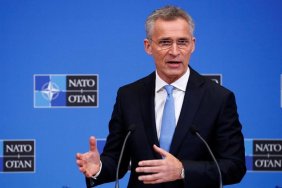
On 16 December, the NATO secretary-general said after a meeting with Ukrainian President Volodymyr Zelenskiy that the alliance did not see any signs of Russia slowing down its military build-up near Ukraine's borders.
We shall remind you that in recent days Vladimir Putin has been demanding in talks with the leaders of the Alliance to give legally recorded guarantees ruling out any further NATO advancement eastwards and the deployment of weapons in Ukraine that allegedly threaten Russia.