


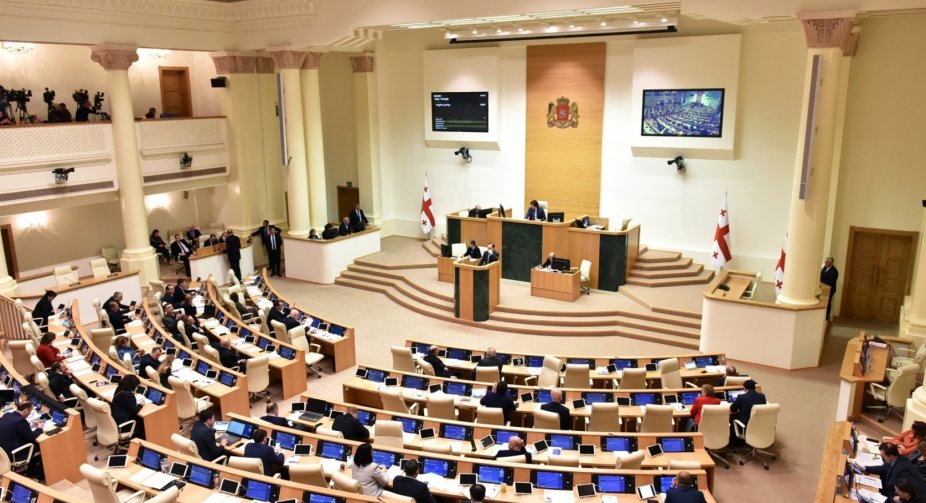

In the first reading, the Parliament of Georgia supported the draft law on deoligarchization introduced by the ruling party and written by analogy with the Ukrainian one.
This is reported by "News-Georgia".
80 votes "for" and 9 "against" were cast for the project.
Before the vote, the leader of "Georgian Dream" Iraklii Kobakhidze said that the project is in the country's interests so that "the oligarchs, who received blood money, millions and billions at the expense of the people, do not return to power." At the same time, Mria insists that its co-founder, billionaire Bidzina Ivanishvili, does not fall under the definition of an oligarch.
The opposition stated that the government is "mistaking black for white" and will not be able to deceive the European Commission (the need to pass such a law is in the list of recommendations that Georgia must fulfill in order to acquire the status of a candidate for EU membership), and plans to introduce an alternative project.
"This facade change, conceived as a mechanism for punishing the opposition... "Mriya" does not want to fulfill the 12 conditions of the European Commission, and, on the contrary, will use this law for repression," cried Khatiya Dekanoidze, a deputy from the United National Movement.
The project proposes to consider an oligarch a person who meets at least three of the following criteria: participates in the political life of the country, has significant influence on the mass media, is the ultimate beneficiary of a company that has a dominant position in the market and maintains or improves it during the year; the confirmed amount of assets of a person and the business of which he is the beneficiary, as of January 1 of the corresponding year, is one million times greater than the subsistence minimum for able-bodied citizens.
Oligarchs are planned to be included in the special register and restrictions will be applied to them, in particular, a ban on contributions from their own funds, provision of goods, services or monetary contributions to political forces, holding rallies with political demands, financing political campaigns; prohibition of participation in the privatization of large objects.
The law must be in force for ten years after its implementation.