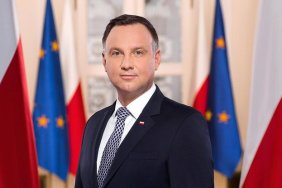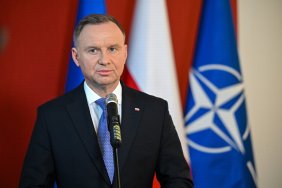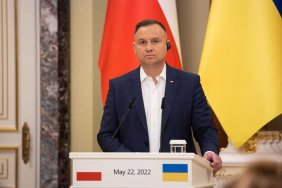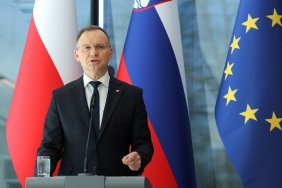


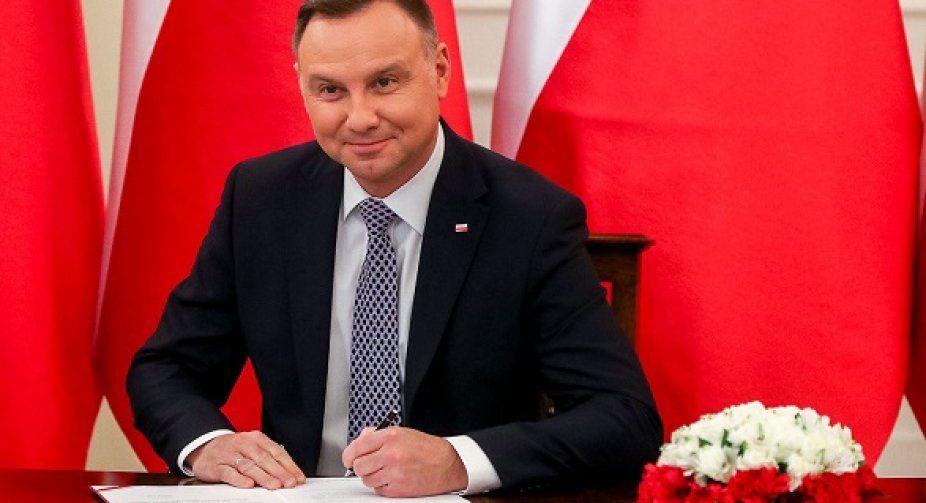

Polish President Andrzej Duda has signed a law which envisages, among other things, an embargo on coal imports from Russia, as well as the possibility of freezing the assets of entities and individuals who support Russia's aggression against Ukraine, Gazeta Prawna has said.
As noted, the law makes it possible to compile a list of individuals and legal entities to which measures in the form of freezing their funds and resources will be applied. In addition, the law prohibits the importation to Poland and transit through Poland of coal and coke from Russia or Belarus.
Thus, the law provides for sanctions against natural or legal persons who, in particular, do not comply with the obligation to freeze funds or economic resources, do not comply with the obligation to immediately provide information under the provisions of EU regulations, do not comply with prohibitions knowingly and intentionally engage in activities with the purpose or result of which is the circumvention of measures specified in the provisions of EU regulations. They face a financial penalty imposed by the head of the national tax administration of up to 20 million zlotys.
Reportedly, the law, given the threat to national security, also prohibits the importation of coal and coke from the territory of Poland, movement between the two countries through its territory and movement from the territory of another EU member state, which comes from the territory of Russia and Belarus.
France at the EU level supported the oil embargo against Russia. Ukrainian Foreign Minister Dmytro Kuleba said this on Friday night.
"Talked to my French colleague Jean-Yves Le Drian. I am grateful to France for supporting the oil embargo against Russia at the EU level. Ukraine is convinced that this step should be taken as soon as possible," Kuleba wrote on Twitter.
The foreign minister also noted that he appreciated France's decision to return its ambassador to Kyiv.
The EU did not impose a ban on Russian oil imports in response to Russia's invasion of Ukraine because some countries are heavily dependent on Russian oil.
On April 8, the Council of the European Union officially announced that the EU had adopted a fifth package of sanctions against Russia, including a coal embargo, which will not come into effect until August 2022. At the same time in the European Commission indicated that they are discussing restrictions on imports of Russian oil.
It was reported that the world's major oil traders plan to reduce the purchase of oil and fuel from Russian state oil companies as early as May 15, in order to avoid violations of the European Union sanctions against Russia.