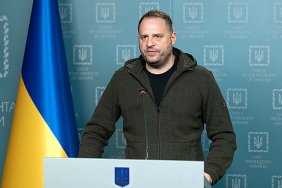


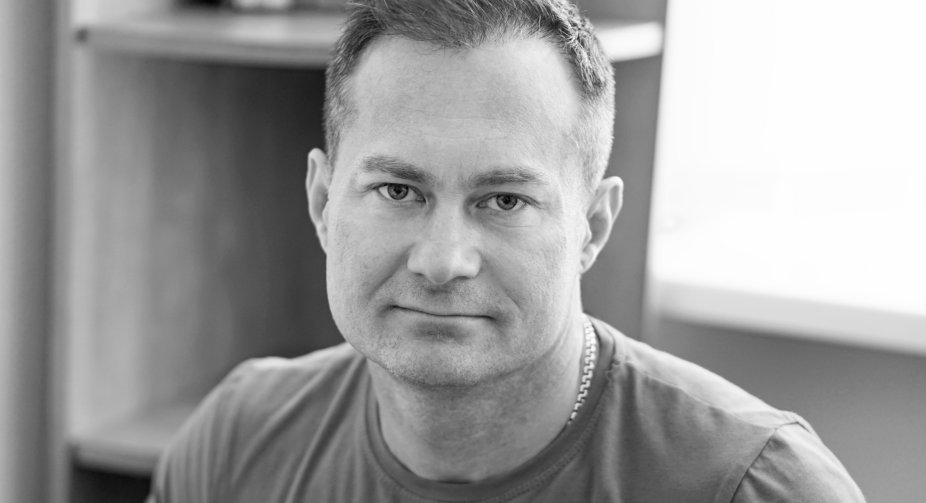

Representatives of Ukraine - Andriy Yermak - and Russia - Dmitry Kozak - equally characterized the meeting of political advisers in Berlin within the framework of the Normandy format. According to Yermak, Ukraine showed firmness, according to Kozak, the sides wasted 9 hours. Political analyst and member of the Trilateral Contact Group Sergey Garmash tells Frontnews about his vision of the outcome.
What were the results of the meeting of the Normandy quartet political advisors? Did Ukraine make a mistake by taking part in the Berlin meeting?
It would have been strange if Ukraine had not participated in this meeting, since we are the ones who insist on the resumption of the Normandy format.
The diplomatic process can be used in different ways. On the one hand, one could expect from it some breakthrough decisions, which were a priori impossible. Since the positions of Ukraine and Russia did not get any closer over the last month at least. And it is possible to use it as a tool of political struggle, as an opportunity to win time. And I think that from this point of view yesterday's talks were useful for Ukraine. If we take the sports terminology, the result is a draw, but in favor of Ukraine. Since it is clear, we need to stipulate.
Why did Russia agree to meetings after a period of a long blockade? Because it counted that under the threat of a large-scale war in Europe, Germany and France would take its side and with their help, the three of them, they would be able to force Ukraine to some unified interpretation of the Minsk agreements.
It is clear that there are hundreds of thousands of Russian troops on our borders, and when Russia presents ultimatums to the U.S., this unambiguous interpretation could only be in Russia's favor. What did we see yesterday? What we saw, as Mr. Kozak said, was that in words they had a common understanding with Germany and France, but in reality - neither Germany nor France put real pressure on Kiev. If we take a quote - "we didn't see a willingness to put pressure on Kiev".
That's why I think that Germany and France did promise something in words to Russia, as I understand it now, just to involve it in the negotiation process, to tie its hands in a certain way for possible military action, but nevertheless they did not put pressure on Kiev in promoting the Ukrainian, so-called unified, interpretation of the Minsk agreements.
So we have at least bought time. And in that time, more weapons from abroad than in eight years of war. And at the very least, we have established ourselves as a subject of international politics. Because neither Germany, France, nor Russia were able to put such pressure on Ukraine that the Kremlin was counting on. That is, Ukraine's position is adamant, as Mr. Kozak said. And in my opinion, this is certainly a positive result.
Has Germany and France been influenced by Macron's meeting with Putin, where the Russian president made statements that ignored international law and characterized the position of France in particular and the West in general in an unflattering manner?
It's hard to say whether it had an impact. Because we don't see any change. In fact, Paris and Berlin have taken a cautious lip service to Russia, but have not supported Russia in demanding that Ukraine be forced into direct negotiations with the collaborators of Donetsk and Lugansk. This was the case before. This is evident from the closed correspondence published by Russia. I personally do not see a change in policy, so I do not believe that the meeting in Moscow had any effect on their position.
That is, the accusations that France and Germany are ready...
Well, as yesterday's meeting proved, yes. France and Germany have their own interests. And they do not always coincide with Ukrainian ones. Germany and France are dependent on the Russian Federation, both in terms of energy and, say, the threat of a large-scale war, because in this case Germany and France will suffer - millions of refugees will go to them, there will be problems with energy supplies and everything else. This is why they are following a cautious policy. In their words, as Kozak said yesterday, they support Moscow, but in practice we can see that their position remains more pro-Ukrainian. Probably pro-American, because we understand they are somewhat dependent on the United States, and the US has been clearly defining its position lately as to who are the parties to the conflict and what should be the interpretation of the agreements.
I was even surprised last week - there was a statement from the U.S. Embassy in Ukraine that included the term "interpretation of the Minsk agreements." Not many people used this term before, I think I was the only one who used it. That is, at first the term was only used in Ukraine, but now everyone is talking about it, and the U.S. too. So there is a struggle for narratives, everyone is imposing their vision of the Minsk agreements. Ukraine is defending its vision, and Germany and France are defending their interests, but taking into account the opportunities to put pressure on Kyiv, which they cannot, as we can see, and taking into account the position of the United States.
In an interview with our publication, your colleagues expressed concerns about Andrei Yermak colluding with Dmitry Kozak. Is there any indication that there was no such conspiracy?
Frankly speaking, I have such apprehensions, too. But so far they have never come true. As a member of the trilateral contact group, as a negotiator, I can see that our position has not changed. We are not going to recognize the DPR/LPR as parties to the conflict, as a subject of negotiations. As for the secret negotiations, they would have manifested themselves in the negotiation process anyway. This is the first, and second, Mr. Yermak and Mr. Zelensky know that no solution can remain secret, because it would have to be explicitly implemented.
Ratified or initialed in parliament?
Yes, you'll have to implement it by a bill, i.e. to pass it at the Rada. And the Ukrainian parliament will not accept secret agreements because they will not be accepted by the Ukrainian society. Our society clearly indicates: who is the party to the conflict, who we are fighting with, what concessions we can make, what concessions we can't make. These red lines are clearly delineated.
So it's possible that Yermak is just giving some verbal advances so that the negotiation process can go on, which is beneficial for us now from the standpoint of dragging out the time. But in fact we do not see any secret agreements in the documents, which could promote the interests of Russia. Well, at least in promoting the topic of starting negotiations with Donetsk and Lugansk. This is the main motive that they are pursuing in the Minsk process. That is, they reduce the entire Minsk process to the fact that we should start talking to Donetsk and Luhansk, that we should recognize them as parties to the conflict, recognize the fact of civil war, and free Russia's hands in relations with these unrecognized territories. That's what they failed to do yesterday. I don't see any negative solutions from yesterday's result. We will have to wait for the next meeting of the Trilateral Contact Group, then I will be able to say exactly whether there are any secret agreements, but at the moment I can say for sure. But based on yesterday's results, on Yermak's speeches, I do not see any collusion or compromise with Russia that is unacceptable for Ukraine.
In personal communication, do representatives of the Russian side understand that these agreements are in principle unachievable? It is legally impossible to hold elections in ORDLO if neither the CEC, nor observers, nor political parties, nor two million voters are allowed there? The Russians, on the other hand, have been through law school, they themselves have a good understanding of elections, local government, and the legal field.
You have a naïve view on Russian diplomacy, and I also thought that such dialogue is only possible. But Russian diplomacy is all about pressure. Russia is not prepared to compromise of any kind. It only dictates and sets conditions. It is less interested in the implementation of the OSCE norms, for it is important to push the subjectivity of the ORDLO at all. And then, if it's decided, we will have to come to an agreement with them and go to the elections on their terms, because Moscow will still be behind them, but it will not bear any responsibility.
That is why Russia is not interested in such details. It interprets the agreements in general in a very strange way. For example, it says that these agreements provide for changes in the Constitution, but there is no such thing there. They say that the party to the conflict is the ORDLO, but there is no such thing. What is written there is irrelevant to Russia. For Russia, the Minsk agreements are important as a tool for forcing Ukraine into a direct dialogue with the ORDLO, in order to eventually introduce them into our political space. And then through them, through their special status, to block all Western European-oriented changes both in domestic policy, including, for example, its accession to NATO. This is her tool. That's why they are forcing us to accept these Minsk agreements under pressure of force. So it was in 2014 after Ilovaysk, in 2015 after Debaltsevo, and here for her position of force is the only possible position. She does not understand or see anything else, and it seems to her that there are no other positions.
Maria Zakharova said on the eve of the TCG meeting that the only guarantor for Russia to reduce tension is the return of weapons and an agreement on non-aligned status. As far as I understand, these farcical statements of the Foreign Ministry are left out of the equation, while the Russian colleagues are still discussing serious and urgent issues?
No, the TAG working process is focused exclusively on the Minsk agreements and the agreements in the Normandy format. Everything else - say, the performance of the Russian troops does not affect the working process, because this process is very narrow. These statements are propaganda background, Russia apparently believes that this is pressure on us, and under such pressure we should be softer at the TCG. But in our country this is perceived a little ridiculous. Therefore, Russia can think whatever it wants, but it does not affect us in any way.