

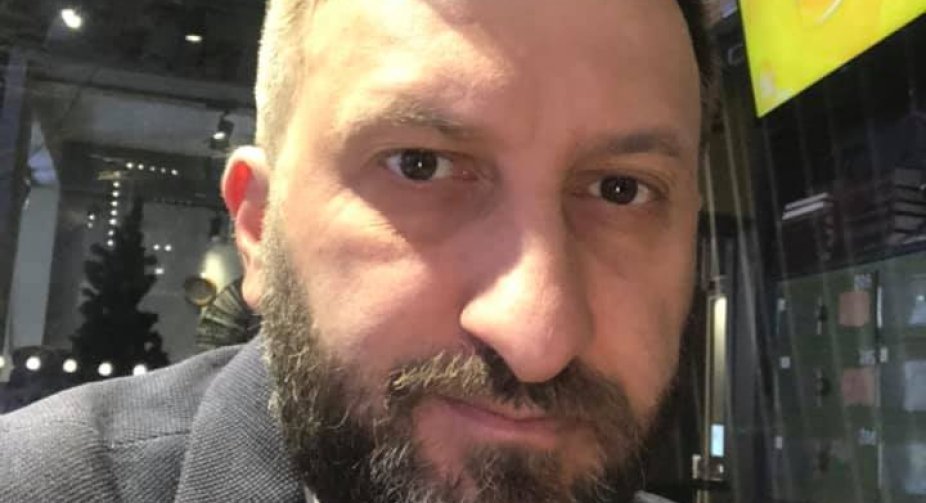

The Ukrainian expert community is ready to police the position of political advisors at the Normandy format meeting in Berlin. According to political scientist Vitaly Kulik, director of the Center for Research of Civil Society Problems, Europe, represented by France, demonstrated its inability to assess the risks of confrontation with the Kremlin, and therefore the representatives of the Ukrainian authorities became the last line of diplomatic defense.
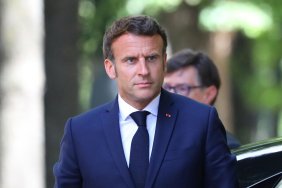
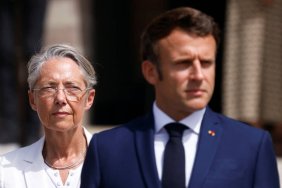
Macron's visit to Moscow and Kiev - what did he signify? Is France ready to surrender Ukraine and put pressure on it in the Normandy format? Or could the French president be angry with Putin?
Macron is far from the first politician to get into this mess with Putin. Putin tells a lot of people and doesn't hide his attitude. He only sees real politics - interests and defends those interests, not any rules of the game. Interests are important to him: if these interests are secured, it is possible to talk. If the side has power and is ready to use it, then this side will be talked to.
Macron tried to appeal to some rules of the game, excluding force from the format of the dialogue. And, accordingly, he got what he got; I don't think that the results of the negotiations will be an electoral advantage for him. In a month in France, the first round of the presidential election will be held, and Macron's chances of winning it are slim - he has rather serious competition, his electoral space is being split, his rivals are speculating on the pro-Russian sentiments in France. And Russian sentiment in France is very strong, we have to admit. Macron can hardly maintain a position between the defense of the European Union as a supranational association and the interests of France. And he understands this.
On the other hand, his presidential position obliges him to act as one of the leaders of the EU, and then as the leader of France. And this leads to a weakness of his position in his conversation with Putin. Yes, he articulated in the conversation that force was unacceptable, and that the European Union would continue to hold its ground, that sanctions would not be lifted. Such things he articulated and confirmed to Putin, but on the other hand, this is not the first time Paris has tried to propose some kind of settlement plan in the Donbas. It largely repeats the German position - meaning the so-called "clusters" - proposed by Steinmeier. In France's interpretation, it is, on the one hand, to achieve political stability with Russia. But at the same time pushing Ukraine to parallel implementation of the Minsk agreements.
What is meant by that?
The parallel promotion of the political and security case. The EU, first of all Germany, and now probably France as well, are saying that it is necessary to implement the Minsk agreements step by step, meaning a step of security - a step of politics, a step of politics - a step of security. Not first security and then politics, and it's in such an alternating progression.
For Ukraine it is dangerous, because we have no guarantees from our international partners in the implementation of security cases. At the moment there is no fulfillment of Russia's obligations - its statement about guaranteed security we do not have. We have shelling every day. Since the meeting in Paris, we have not received a single day without shelling of our positions by militants. In fact, there is no silence regime.
Moreover, there is not even access of the International Committee of the Red Cross to people held in the occupied territories (this was also Russia's obligation); there is no security even for OSCE observers! We remember the story of the blocking, de facto arrest of observers in Donetsk and Luhansk.
Passportization - promotion of Russian citizenship among the local population in the occupied territories, in fact, forced passportization for those who work in the public sector. Plus - armament and the presence of heavy equipment on the line of separation, which is explicitly stipulated by a set of measures for the implementation of the 2016 Minsk agreements.
And all this gives grounds for Foreign Minister Dmitry Kuleba to talk about imposing sanctions on Russia for failure to comply with the Minsk agreements. But France doesn't see that, Macron doesn't see that, he sees only one side of the coin, believes that the responsibility for the failure to implement the Minsk agreements lies on two sides, Ukraine and Russia. And he's trying to say that we shouldn't politicize, we shouldn't radicalize, we shouldn't raise the stakes, but we should look for points of compromise and so on.
In my opinion, Macron looked very weak in Russia and even more weak in Kiev, because he did not bring anything, no "added value" to the Normandy format advisors' negotiations. Moreover: In the French press, Macron made a statement - there is an interview from February 6 - where he talks about the need to take Russia into account in shaping the European security architecture. And this is very dangerous for Kiev, because in this way the West, represented by Paris, says that it is ready to comply with Moscow's ultimatum not to deploy NATO armed forces in Eastern Europe, not to deploy missile defense systems, to provide Ukraine with lethal weapons, some red lines for NATO expansion, and similar things that are unacceptable for Kiev.
By the way, it flashed that he offered Zelensky the status of Finland.
The fact is that Finlandization is an issue that has been raised many times. This story has been going on since 1994 with the Budapest Memorandum from time to time, and we are offered Finlandization as a solution for the future of Ukraine - joining the treaty of "non-aligned countries" (there is such a treaty, in its time Yugoslavia initiated it). But all these stories are for the poor, because the history of Finland is a pure example, which was possible only in certain political and historical conditions.
Finland has no disputes with the Russian Federation, with the exception of Karelia, but this is a very old dispute, which has gone down in history, and which has no political continuation. Moreover - Finland is maximally integrated into the Russian economy, it is favorably located, and the threats to Finland are minimal from Russia in its current context.
So for Ukraine, which has a war with Russia, occupied, annexed territories, to speak about Finlandization as a model does not correspond to any goals and strategic tasks for Ukraine as a state, which is trying to survive in these conditions. And striving for the "Finnish model" is the wish of a person who does not understand the depth of the problems and contradictions between Kiev and Moscow. Not only between states, but also between countries, between nations.
Accordingly, without protection, without active assistance, without Ukraine's entry into collective defense systems, with institutionalized obligations of mutual protection and defense, Ukraine's survival as a state is problematic. Yes, Ukraine will be constantly improving its own defense capabilities, and will always rely primarily on its own army, and only then on the commitments of our partners, but the future, which may arise in a certain perspective, may arise only when Russia is confronted with Russia, and we are part of a larger association, than Ukraine itself. Only then can Russia's expansion be delayed. And in this format of Finlandization it is simply to create conditions for Russia. Say, we give a reprieve, and then Russia advances again.
Macron said during his interview with Putin that Zelensky had withdrawn the law on the occupied territories. As far as we can tell, this law has not been enacted anyway, and it is disadvantageous to Ukraine. However, does Macron consider it disadvantageous for Russia?
No, the law is called "On peculiarities of state policy to ensure state sovereignty of Ukraine over the temporarily occupied territories in Donetsk and Luhansk regions". And there is also the "Law on Special Status". These are two different bills. The one "On peculiarities" strengthened the negotiating position of Ukraine. It gives a clear notion of "aggressor country", "participants of occupation administration", "responsibility of participants of occupation administration", "order of amnesty for people who did not keep arms, and a number of other positions, which would be useful for Ukraine if we had voted for it.
Moreover, Ukrainian experts praised its adoption, but the President's Office pressed the Cabinet of Ministers of Ukraine and it withdrew the bill from the Verkhovna Rada. Yes, there is a comment to this document from the Venice Commission, which criticized Kiev's position on this issue. Especially in terms of amnesty and a stricter procedure of amnesty for suspects. But in my opinion in the conditions of the transition period, in the presence of the hybrid war, we really needed this law. The fact that the Office of the President went to withdraw this bill, I see as a concession to Russia and Kiev's attempts to move the Normandy format from the deadlock, moreover, there is information that the demand to withdraw this bill directly sounded from the Kremlin, and it was a condition for the negotiations in Paris.
So it was the Kozak-Yermak line that sent the signal?
Yes. In other words, it was a concession, all the same.
Is there any probability that Ukraine's position will be clearer and tougher or there are no grounds for optimism anyway?
I would say that the authorities with all their newsmakers will hold the position that they will not bend, will not agree to the Russian reading of the Minsk documents, but as an expert, I have insider information from the corridors of power, and many of my colleagues are afraid that there will be an attempt to sneak certain concessions in a cheating way.
Yermak has already done this many times: there have been three attempts to sneak Steinmeier's "clusters," two attempts to find an "advisory council" under the trilateral advisory group with representatives of the occupation administrations. These things were already in place. Then they made excuses, they hid, they lied. There have already been such variants.
That is why the expert community of Ukraine is following Yermak's hands quite closely and already all possible political groups, centers of influence, the expert community have articulated to Yermak their position on this issue: if suddenly he tries again to conduct some hidden initiatives, it will not have any consequences - it can all be blocked at the stage of implementation. Yermak will have to pass between the drops, and this passing, balancing on the level of acceptance-rejection of certain concessions will be very difficult for him.
I am told that there are a couple of scenarios, and one of the scenarios is quite optimistic for Kiev: there is a list of concessions and a list of options under which we will not make these concessions. These concessions are minimal: they are related to the traffic of people, to the exchange of prisoners, to the issue of closing debts on electricity and on gas, and on social services, the payment of pensions to certain categories of citizens who cross the line of separation. That is, very tactical questions, but in these questions some concessions and interaction are possible.
The question of the recognition of representatives of the occupation administrations in Donbas and the Luhansk region as a party to the negotiations is out of the question. If Yermak agrees to this, I think we will be talking about political destabilization, people taking to the streets and a mass protest movement.
But holding elections in Donetsk and Luhansk oblast looks impossible from the point of view of legitimization: there are no election monitoring instruments, no registration instruments - the CEC of Ukraine has no access there, no access for the 2.5 million citizens who lived in Donbas before the war began. Isn't all this a reason to say to our Western partners: gentlemen, the Minsk agreements are simply legal nonsense?
Well, the Ukrainian side constantly talks about this in the political subgroup of the International Contact Group and it was articulated in the Normandy format - that until there is access for Ukrainian political parties and the media to the occupied territories and until there is full operation of observation structures, not only the OSCE, but also independent observers of the election process, there can be no talk of any elections, let alone recognition of their results.
But here it should be noted that this position of Kiev did not find support in international structures - first of all, in the OSCE under its previous leadership. But changes are possible here because the style of negotiations of the new leadership is different. Now the OSCE understands that it is impossible to hold effective elections and to recognize their results. But on the other hand there are political decisions. Political decisions refer to the fact that we were able to hold elections in conditions of political control in Iraq and Afghanistan, but to hold elections in the occupied territories under the condition of providing 30 minutes on local TV for Ukrainian political parties and letting observers from OSCE who will be citizens of post-Soviet countries - and voila, we have a quasi-election process. It's a trap! Everybody understands this. And at the level of diplomats and participants of the trilateral contact group they resist it as much as possible. But the position at the Bankova office is different. That is why I say that we should watch the hands of Mr. Yermak.
What question would you like us to ask you?
It is interesting that in the negotiation process, when there is an understanding that the countries come to a certain document, a certain agreement, which is signed, initialed by the parties - there is an exchange of "gifts". Now there is information that such a gift could be an exchange of prisoners of war. If this suddenly happens, it would be an indication that the parties have agreed on something that is not transparent, and one should look for leaks or demand the publication of all data on the negotiation process. Putin no longer makes advances with such gifts. After the Paris meeting in 2019, Putin did not make any more such gifts before any negotiations.
So, this will be an indication that Ukraine has already given up something?
Yes! If something like this happens, it means that something happened and we made concessions somewhere.