

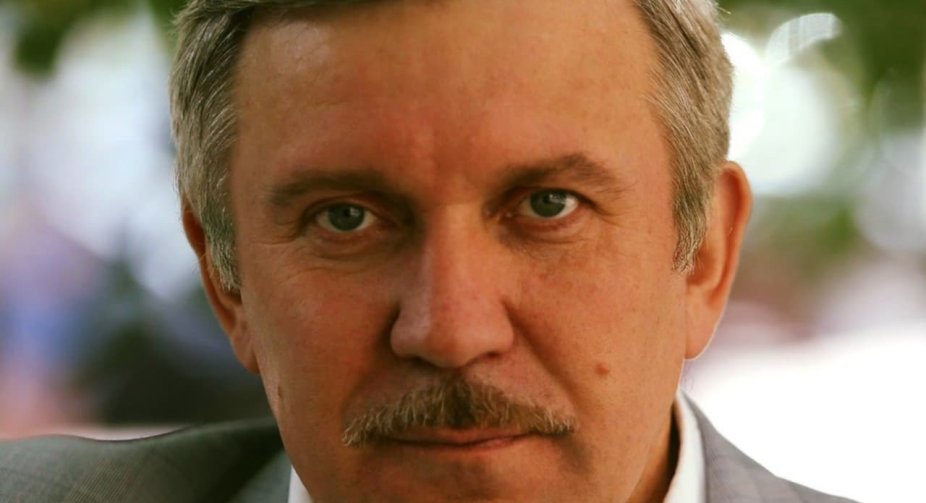

Europe is in need of alternative energy supplies, and Turkey cherishes the hope of becoming a hub for "Turkic" gas to the Western market. However, despite the availability and demand in Europe and proposals in Asia, no large-scale energy projects have been implemented. The President of the Center for International Studies "Strategy XXI" Mikhail Gonchar talks about the difficulties on the way of Turkic gas.
Can we assume that after Erdogan's visit to Ukraine we should expect the resumption of projects of alternative gas supplies to Europe - not from Russia but from Central Asian countries, primarily Turkmenistan?
I don't think the visit will have an impact on gas flows. It is unlikely that today the project is in the epicenter of attention. In addition, Turkey is not the owner of any gas resource to supply anywhere. There is talk that Turkey is developing and will develop a fairly serious field discovered in the Black Sea, but its development requires both time and money. And it certainly will not happen this year, and it is unlikely to happen next year as well. In addition, this resource will go to Turkey, not somewhere for export.
As for the option of taking Azerbaijani gas through TANAP (Trans-Anatolian Pipeline) and further through the existing pipelines to the countries of Central and Western Europe, as well as to Ukraine, this does not have a quick prospect.

ТANAP
Moreover, the situation with the scandal in Bulgaria, where Azerbaijani gas was supposed to arrive in the amount of 1 billion cubic meters per year (1/3 of the Bulgarian gas market) is very indicative. One billion cubic meters turned out to be three times less. It turned out that the previous Bulgarian government had unclear agreements with Gazprom, which blocked Azeri gas deliveries. So Russia put a stopgap for alternative gas flows in Europe.
As for the strategic direction, which has not moved for a quarter of a century - that is, the Trans-Caspian pipeline to bring Turkmen gas to Europe via the Caspian, Azerbaijan, Georgia and Turkey, alas, we see another burst of positive rhetoric that the project is about to have a new restart, but, nevertheless, we see no concrete action.
This would be important for the supply of gas from non-Russian sources to the European market. Turkmenistan has the world's fourth largest gas reserves - after Iran, Russia and Qatar. But, alas, nothing happens, and in the current situation, Russia is making efforts to prevent such a competitor from appearing on the European gas market. Moreover, China is not going to be happy with this idea because, in principle, most of the Turkmen gas goes to China. And although the Turkmen leadership would like to return its gas to the European market, as it was in 1990s and 2000s, but, alas, it is unlikely to take any vigorous action, being wary of getting caught in the crossfire of both Moscow and Beijing.
Here is a very noteworthy moment. On February 5, literally the day after the Olympics opened, President Xi Jinping received President Gurbanguly Berdymukhamedov of Turkmenistan. The PRC leader suggested expanding cooperation in the gas sector. China wants to increase the supply of Turkmen gas to compensate for the reduction of LNG imports from Australia, because the latter, together with the United States and Britain, has created the anti-Chinese alliance AUKUS. And China is ready to continue supporting Turkmenistan with supplies of anti-vaccine vaccines. These are the realities surrounding Turkmen gas.
Therefore, in principle, although Turkey could have played a fundamental role, namely to encourage Turkmen gas to reach the European market through Turkey, but alas, this has not happened since the 1990s.
Can Turkey realize this dream now that Western countries have shown interest in TANAP and TAP?
I doubt it, because Erdogan, for all his energy, nevertheless remains out of his weight category to confront both Beijing and Moscow at the same time.
So, the main reason is an external factor, rather than peculiarities of Turkey's domestic politics?
Well, if you take Turkmen gas, of course, this is a simultaneous challenge to both Russia and China. But if you take another dimension, why wasn't the Trans-Caspian built in the past? Because, in principle, Ankara's position remains unchanged: all Turkic gas must come to Turkey and pass through its territory to Europe. And Turkic gas is the gas of Azerbaijan and practically all of Central Asia. But Central Asian gas is primarily the Turkmen gas, because Kazakhstan also has a lot of gas, but the produced gas there has to be pumped into the oil-bearing strata to intensify oil production. Therefore, as a gas exporter, Kazakhstan is not very important.
But Turkmenistan is.
Why has the implementation of the Trans-Caspian project to Europe failed at least twice? This is not connected with Erdogan, but with the peculiarities of those periods in the 1990s and 2000s: as soon as the prospect of the Trans-Caspian appeared on the horizon, there was a "sweet offer" from Moscow to Ankara, which was difficult to refuse: why do you need gas from Central Asia, when there is gas from Russia, which you already get, we just optimize the route. So the Blue Stream project was born: from Russia to Turkey across the Black Sea. "Blue Stream has disrupted the implementation of the Trans-Caspian.

Blue and Southern streams
The second time it was related to the implementation of the Nabucco project. This project was defined as a priority of the EU, and it was focused on the gas of Azerbaijan and Turkmenistan through the Caspian Sea, South Caucasus and Turkey to Europe. The Trans-Caspian Gas Pipeline Turkmenbashi - Baku was actually to become the main pipeline feeding Nabucco. The Turkish state oil and gas company BOTAŞ played an important role in the Nabucco consortium. Russia opposed Turkmenistan's intentions, saying the status of the Caspian Sea is uncertain, and the implementation of such a project requires the consent of all five countries in the region, not just Ashgabat and Baku. At the same time Russia offered Turkey its "South Stream" which served as a killer for Nabucco.
Why wasn't it clear to Europe that Russia monopolized the supplies?
It is a result of the work of the Russian lobby in Europe and the phenomenon we call "shredderization" of European politics. Russian propaganda efforts were aimed at creating and promoting several myths: Russian gas is the cheapest and has the most optimal transportation route from Yamal. Although if you look at where Yamal is and where Turkmenistan is, the transportation from Turkmenistan to Europe is in no way longer than from the Arctic. Russia also discredited the countries of alternative supplies in Europe. They said - well, what kind of gas is there in Azerbaijan? It is not there, or there is very little of it! They used to say the same thing about Azerbaijani oil in the 90s. They said: "What are you, Europe, sticking to? There is something there, but just a little. The same goes for gas from Central Asia. They say you mess with the totalitarian Turkmen regime. As if the Russian regime is very democratic.
Well eventually it all worked out, and now when they see what it's all about in Europe they think how and where they could get alternative supplies?
Azerbaijan comes to mind. But Azerbaijan cannot give much gas to Europe purely objectively. TANAP and TAP, the infrastructure that has been built, can bring only 10 bcm to the EU market. This volume of Azeri gas can go only to the south of Europe: Bulgaria, Greece, Albania and the south of Italy. These are not the markets that are major gas consumers. The main consumer is Central Europe, Germany. And Gazprom made every effort to prevent Azeri gas from reaching the center of Europe. It is not for nothing that I cited the example of Bulgaria with its "Gazprom jams", and Azerbaijan with its TAP project which leads to a "gas dead-end" in Europe. There was a project of Slovak company Eustream called Eastring that would bring Caspian gas to Central Europe. But the Russian gas that dominates there doesn't need any competition. There are already two Northern streams laid there, and from the south there is Turkish Stream, which is half the size of South Stream. And now the point is that Gazprom is quietly expanding the gas transportation infrastructure in the Southern Federal District with one purpose - to lay two more strings of "Turkish Stream" across the Black Sea.
That is, they felt that they had grabbed Europe in a gas pincer, and we are talking about once and for all cut off even the prospect of an alternative source from Turkmenistan.

Istanbul-Novy Urengoy - 4,039 km straight line Istanbul Ashgabat - 2,530 km straight line
It is clear that Turkmenistan is not in a weight category to compete with Moscow and Beijing, and the EU support to it can only be verbal - Brussels will once again say: "Yes, yes, yes! We are very interested in your gas, but do something! We are ready to give money!" But who dominates the Caspian Sea? Far from Turkmenistan, and far from Azerbaijan.
In Azerbaijan we see the Russian military presence, which has been absent for almost 10 years. It was liquidated in 2012 after the closure of the Gabala radar station, and even before its closure there was a technical contingent. And now there is a military contingent in Azerbaijani territory, and this is not by chance. That is, Russia shows that Putin's octopus tentacles are on all pipes that pass through the South Caucasus.
The conclusion is that the war in Karabakh has brought great dependence to Azerbaijan and Turkey.
It turns out so! In this hybrid form of the so-called "peacekeeping contingent", it was able not only to be present but also to influence the processes. That is why we say that, yes, Azerbaijan got a victory in the war with Armenia, but lost to Russia. It is kind of an under-victory.
For a long time it was thought that Russian gas was diluted with Turkmen and Kazakh. If that is so, don't Kazakhstan and Turkmenistan still have leverage over Russia's gas policy?
That was once the case. Somewhere in the late 90s - first half of the noughties, when Gazprom had a certain problem with increasing its production base. At that time, they did import a lot of gas from Central Asia. Part of it was used for consumption inside Russia, and part of it was actually exported to Europe, for example, according to the well-known Rosukrenergo scheme.
But then, in principle, when Gazprom increased its production capacity in Siberia, in April 2009, "suddenly" there was an explosion at one of the compressor stations of the Central Asia-Center gas pipeline. And then the supplies of Turkmen gas were interrupted. Russia said the pipes were worn out and old. Turkmenistan carried out repairs on its territory for two weeks, but Russia did not restore the previous volumes of imports. And what's more, they reduced their imports to almost zero for five or six years. Because Turkmen gas has become competitive for them. Now they import funny amounts of gas - 5 bcm in 2020 and 10 bcm in 2021. In 2003, while Saparmurat Niyazov, the late Turkmenbashi I, was forced to sign a contract, under which Gazprom contracted all the gas it produces for 25 years in advance. That is, Gazprom was supposed to buy all the gas until 2028. In principle, according to this contract about 50-60 billion cu m of Turkmenian gas a year would be supplied to Russia now. But in 2009 they stopped all that, because that gas turned out to be an unnecessary competitor. A special operation by Gazprom's dispatch service followed, which resulted in an explosion of the pipeline. But it was presented as if the old pipeline had failed. Very soon it turned out that this was a deliberate action.
As far as can be judged after the Karabakh war, is Turkey's lobbying capacity in Europe limited?
I don't think its lobbying potential is very limited. The question here is how effective it is. Unfortunately, Europe has lost Turkey. In Europe they are not afraid of Turkey, but they are afraid. Having once promised Turkey membership in the EU, back in 1963, European politicians eventually deceived it. Not only Turkey's political establishment, but all of Turkish society was deceived. And this logically led to the emergence of the Erdogan effect. His elevation is largely due to the fact that the EU has put a barrier for Turkey on its way to membership. But the country has modernized its economy, state institutions and society on the basis of the EU requirements. Moreover, Turkey is a NATO member. By the way, February 18 will be the 70th anniversary of Turkey's membership in NATO.
So I think that what happened in the South Caucasus, in the resolution of the Nagorno Karabakh conflict, Turkey and Azerbaijan showed through their joint efforts that they can do what neither the OSCE nor the Western countries, which have been trying to resolve this problem for a quarter of a century, could do. In fact, no one regulated it, but everything was done to keep the status quo. The Azerbaijani-Turkish tandem made the impossible possible.
There is no stopping Turkey. It has a great potential for development, we see that it is active in the Mediterranean and the Black Sea, and in this sense they are wary of it. On the one hand, Turkey's problem is that it may have a situational change of approach. Why was it possible to restore the Russian presence in Azerbaijan? Neither Azerbaijan nor Turkey needs it at all. But Turkey simultaneously solves the issues of balancing interests with Russia on Syria, Libya.
They played their game and it resulted in a very tentative compromise, which resulted in Russia's presence in Azerbaijan.
So, on one hand Europe is interested in more gas passing through Turkey, but on the other hand, they are afraid of how Turkey will behave further, how it will interact with Russia, what will be the relations with Greece, Cyprus, etc. So this is a tangle of these issues. In other words, this is a tangle of such questions, to which there is no answer in Ankara or Brussels. Ankara also understands that it is impossible to go too far in its relations with Europe. Because if you take a pro-Kremlin position in the context of the Eastern Mediterranean, the dream of becoming a transit hub for energy resources to Europe may stay at the present level: it is already, you might say, accomplished; those 10 billion cubic meters that would go through; but that is not what Ankara has dreamed about and is dreaming about. The idea to collect "Turkish gas" in Turkey and then send it to Europe will remain fata morgana.