

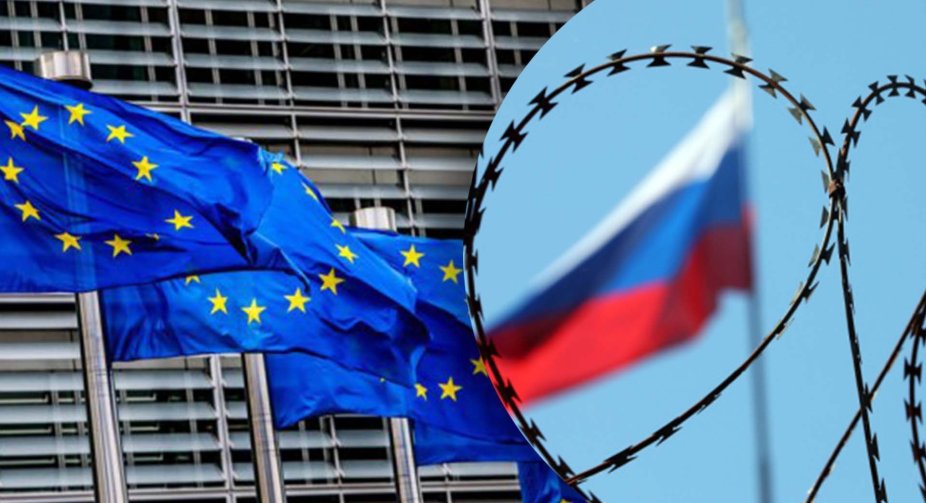

On Friday, January 27, the Council of the European Union decided to extend economic sanctions against the Russian Federation for six months due to Russian aggression against Ukraine.
This is reported on the website of the Council of the EU.
"The Council today decided to extend for six months, until July 31, 2023, the restrictive measures aimed at specific sectors of the economy of the Russian Federation," the message reads.
These sanctions were first imposed in 2014 in response to Russia's actions and were significantly expanded in February 2022 following Russia's full-scale invasion of Ukraine.
They currently consist of a wide range of sectoral measures, including restrictions on trade, finance, technology and dual-use goods, industry, transport and luxury goods.
The sanctions also include a ban on the import or transportation of marine crude oil and certain petroleum products from Russia to the EU, the disconnection of several Russian banks from SWIFT, and the suspension of broadcasts and licenses of several pro-Russian disinformation media.
On January 20, the Reuters agency reported that the countries of the European Union are working on the tenth package of sanctions against Russia.
According to the media, it will come into effect before the anniversary of the full-scale Russian invasion of Ukraine — February 24, and the restrictions will apply, in particular, to cooperation with the Russian Federation in the field of nuclear fuel.