


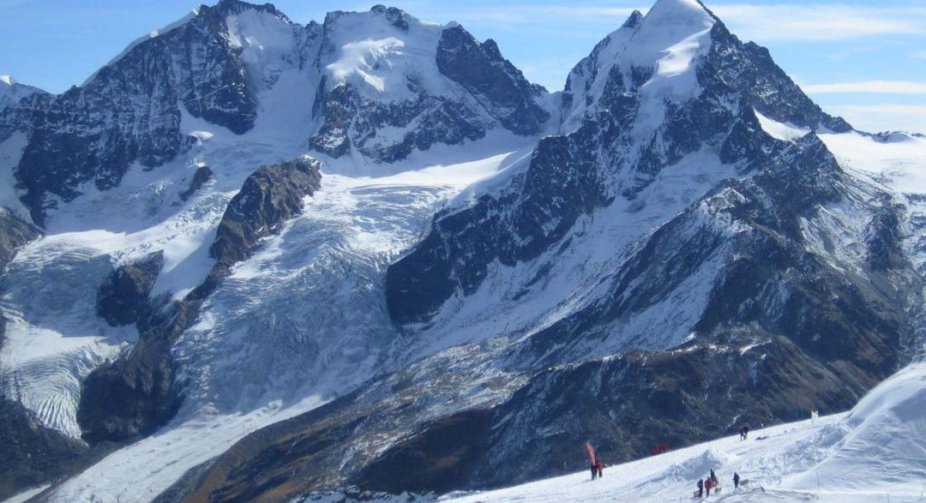

Glaciers in the Alps this year may lose the greatest mass in about 60 years since the beginning of observations of them.
This is evidenced by the data obtained by Reuters.
Scientists determine how much a glacier shrinks in a year by looking at the difference between how much snow fell in winter and how much ice melts in summer.
Last winter brought relatively little snowfall. Later, the Alps experienced two strong heat waves in early summer - including one in July, when temperatures reached around 30 Celsius in the Swiss mountain village of Zermatt.
During that heat wave, freezing water was measured at a record altitude of 5,184 meters. This is above the height of Mont Blanc. Usually in the summer, the water freezes at 3,000-3,500 meters.
Most of the world's mountain glaciers are remnants of the last ice age. They are retreating because of climate change. But the glaciers in the European Alps are especially vulnerable because they are smaller and have relatively little ice cover.
Meanwhile, temperatures in the Alps are rising about 0.3°C per decade, about twice as fast as the global average.
If greenhouse gas emissions rise, alpine glaciers are expected to lose more than 80% of their current mass by 2100. Many will disappear no matter what emission measures are taken now because of global warming caused by past emissions, according to a 2019 report by the U.N. Intergovernmental Panel on Climate Change.
Reuters spoke with glaciologists in Austria, France and Italy, who confirmed that glaciers there have record losses. In Austria, "glaciers are free of snow to the peaks," said Andrea Fischer, a glaciologist at the Austrian Academy of Sciences.
Himalayan glaciers are also on track for a record year of ice loss, scientists told the agency.